
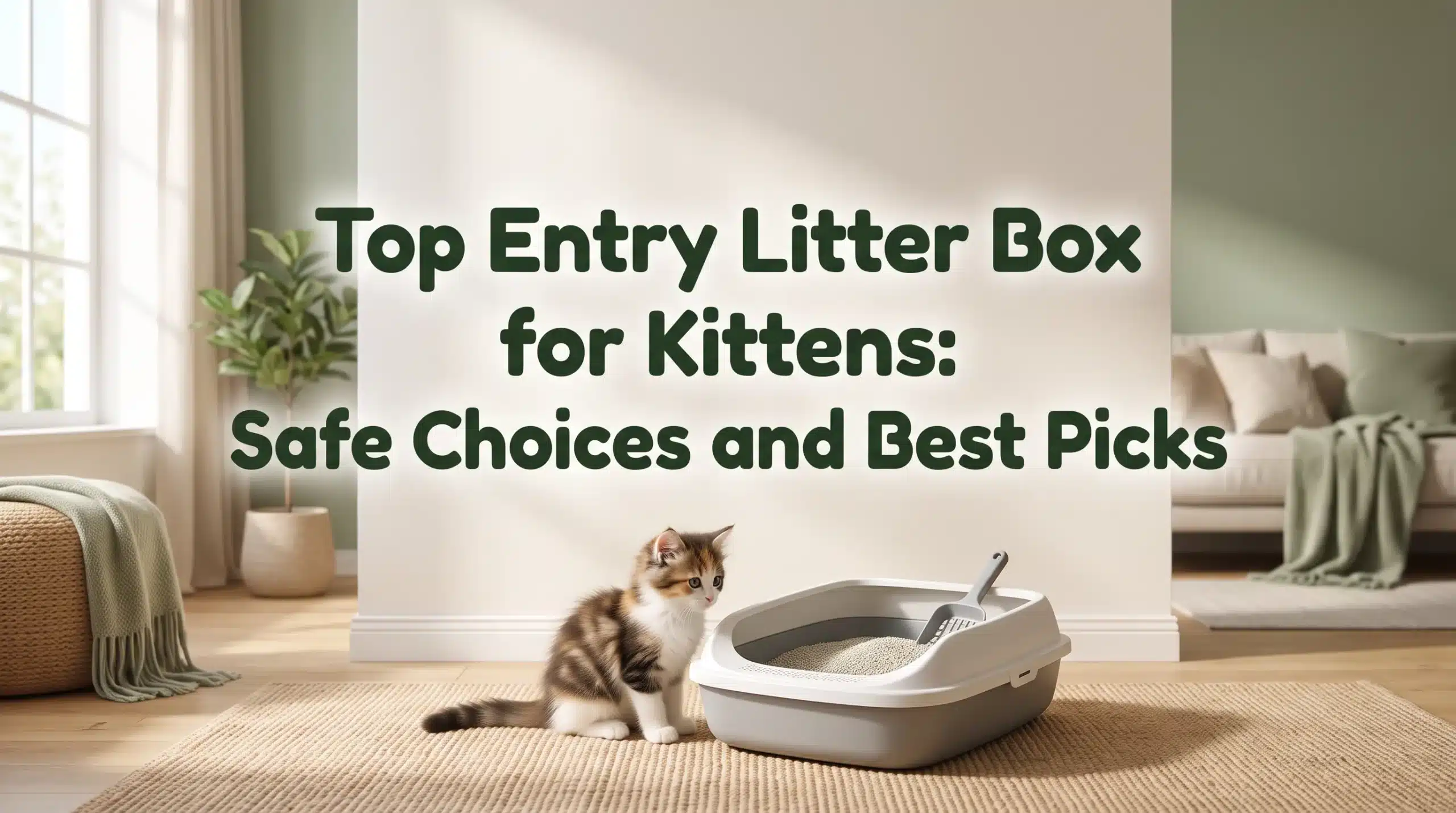
A top entry litter box for kittens can be excellent for reducing litter tracking, hiding visual mess, and keeping curious dogs or toddlers out of the litter. But there is one condition: your kitten must be physically ready to jump onto the lid, step through the opening, and climb back out without hesitation.
For a very young, small, nervous, or newly litter trained kitten, a low front entry box is usually the easier starting point. The cleanest floor is not worth creating a bathroom obstacle. Once a kitten is confident, coordinated, and consistently using a litter box, a top entry design can become a practical upgrade.
Key Takeaways
• A top entry box is best for a kitten that can jump confidently, land steadily, and turn around comfortably inside the box.
• For kittens under roughly six months, a low entry or front entry litter box is often the safer default because access is simple and immediate.
• The lid opening, landing surface, interior turning room, and lid stability matter more than the box’s color or decorative shape.
• Top entry designs can reduce litter tracking because cats step out onto the lid instead of walking directly from litter onto the floor.
• Keep the old box available during a transition. A kitten that hesitates at the new opening may choose the floor if no familiar alternative is nearby.
• Convertible boxes are especially useful for kittens because they can begin as front entry boxes and become top entry boxes later.
The practical rule: choose the easiest box your kitten will use consistently. A litter box only works when your kitten can reach it quickly, enter it easily, and leave it without feeling trapped.
Is a Top Entry Litter Box Right for Your Kitten?
Start with physical capability, not age alone
A kitten’s calendar age is only part of the picture. Two kittens of the same age can have very different body size, coordination, confidence, and jumping ability. The better question is: Can your kitten repeatedly get on top of the box and step through the opening without slipping, scrambling, or pausing?
Cats.com notes that physical size and jumping ability are the main constraints for kittens using top entry litter boxes. A kitten that easily hops onto a cat tree platform, couch cushion, or low chair and lands with control may be ready sooner than a kitten that is still cautious on short jumps.
Still, readiness should be judged conservatively. A kitten might manage the jump during play, then avoid making the same effort when they urgently need to use the litter box. Elimination is not a skill test. The access route should feel easy even when a kitten is sleepy, startled, or has just woken from a nap.
A practical readiness check
Before buying a top entry design, assess these four movements around a similar height. You do not need to train jumps for this purpose. Simply observe normal play and movement at home.
|
Readiness sign |
What it looks like |
What it suggests |
|---|---|---|
|
Controlled upward jump |
Kitten hops onto a stable low surface without clawing for purchase |
The lid height may be manageable |
|
Steady landing |
Kitten lands without sliding or wobbling |
Balance and coordination are developing well |
|
Confident downward jump |
Kitten jumps down without freezing at the edge |
Exiting the box is less likely to feel difficult |
|
Comfortable turning |
Kitten can turn in a carrier or roomy box without crowding |
Interior space may be adequate |
If one of these movements looks awkward, I would wait. The downside of waiting is a little more litter on the floor. The downside of forcing the issue can be box avoidance, missed attempts, or accidents beside the box.
Catlink’s comparison guide suggests that kittens under about six months may be too small for top entry use and identifies low entry designs as a better default for young kittens. This is useful guidance, not a hard developmental deadline. A large, athletic kitten may be ready earlier, while a smaller kitten may need longer.
When a front entry box is the better choice
I recommend starting with a front entry or open low sided pan when a kitten is newly adopted, newly weaned, recovering from illness, or still learning where the bathroom is. During early litter training, the priority is fast recognition and easy access.
A top entry design adds several steps:
- The kitten must locate the box.
- The kitten must jump onto the lid.
- The kitten must identify the opening.
- The kitten must climb inside.
- The kitten must repeat the process to leave.
That sequence is not inherently unsafe for a capable cat. It is simply more complicated than walking through a low doorway. If a kitten is having accidents, simplifying access is usually more helpful than adding privacy or odor containment.
This is also why a top entry box should not be used to solve behavior problems by itself. A kitten that avoids the box may be reacting to the entry height, location, litter texture, odor, cleanliness, illness, or competition from another cat.
Why top entry boxes help with litter tracking
The main appeal is straightforward: a top entry litter box creates a small transition zone. As your kitten climbs out, loose granules can fall from the paws onto the textured lid rather than being carried across the room.
Arm & Hammer explains that top entry designs can reduce litter tracking because their high walls and exit route help contain scattered litter. This is especially helpful for enthusiastic diggers that kick litter toward the sides of an open pan.
The tradeoff is accessibility. A top entry box often improves floor cleanliness while making entry more demanding. For a mature, agile cat, that tradeoff may be easy. For a tiny kitten, it may not be.
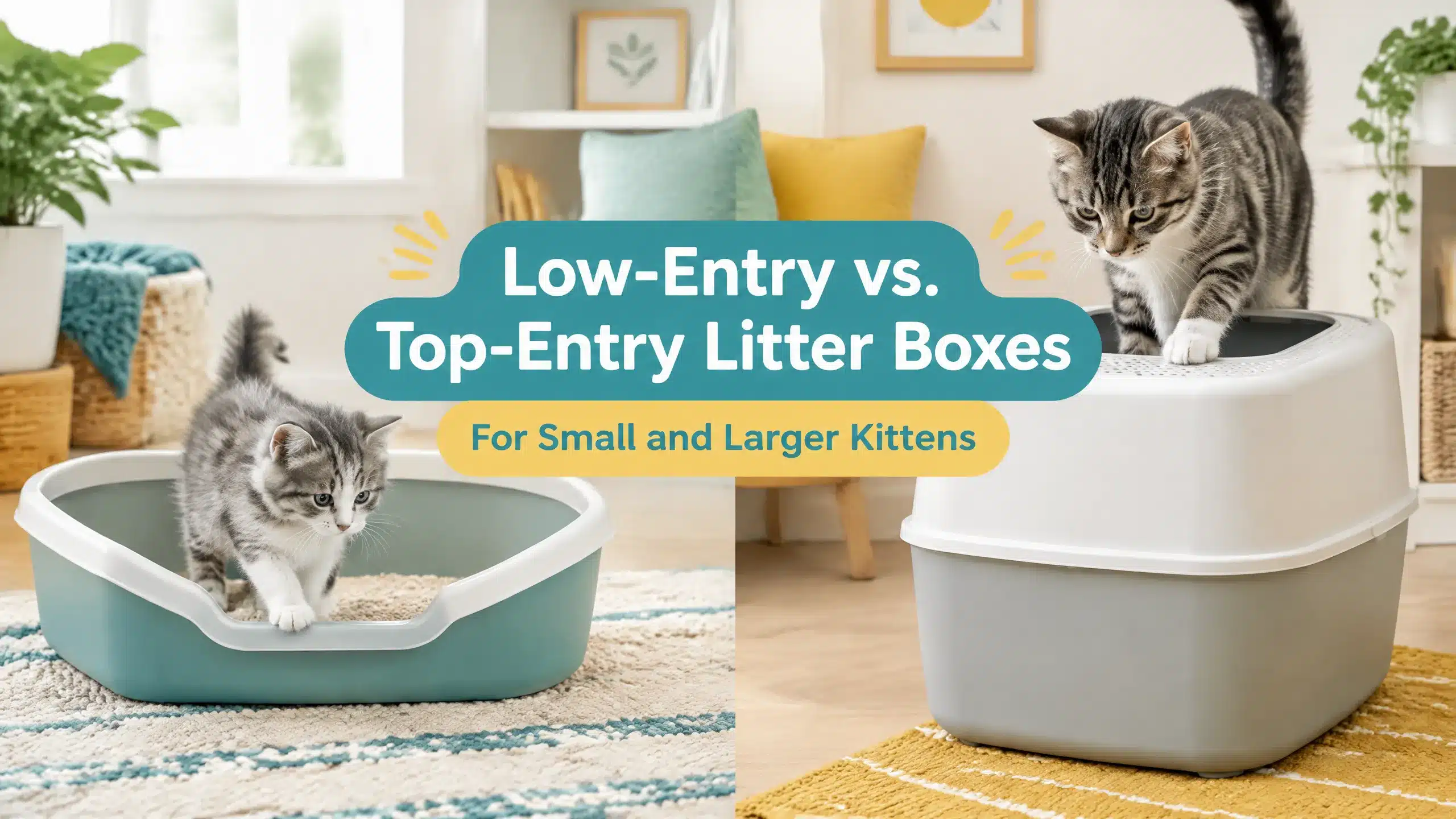
The 5 Best Top Entry Litter Boxes for Kittens
The five picks below prioritize usable openings, stable construction, removable lids, and enough interior room for a growing kitten. Product availability, colors, and bundled accessories can change, so check the current listing dimensions before ordering.
1. Modkat XL Litter Box
The Modkat XL Litter Box on Amazon is the strongest choice for households that want a box to adapt as a kitten grows. Its key advantage is configurability: it can be used with a front entry arrangement before transitioning to a top entry setup.
Catster identifies the Modkat XL as a convertible option that can be configured for front entry use when kittens need easier access.
Choose it if: you want one litter box that can support the transition from kittenhood to adulthood.
Skip it if: you want the lowest upfront cost or have very limited floor space.
2. IRIS USA Large Top Entry Cat Litter Box
The IRIS USA Large Top Entry Cat Litter Box on Amazon is a familiar, simple plastic design with a grated lid that helps catch litter from paws. Its uncomplicated shape is a plus for daily cleaning, and the broad top opening is easier to evaluate than an unusually narrow circular hole.
Choose it if: your kitten is already agile and you want strong litter tracking control without extra mechanical parts.
Skip it if: your kitten is small enough that the lid height feels like a climb rather than a hop.
3. SOUJOY Top Entry Litter Box
The SOUJOY Top Entry Litter Box on Amazon is a deep, enclosed option designed around a simple top opening. Its tall walls help contain digging and spray, while the roomy tub can suit a kitten that has outgrown a shallow starter pan.
Choose it if: your kitten digs enthusiastically and has already demonstrated confident jumping.
Skip it if: you need a box with a front entry fallback built in.
4. Petmate Top Entry Litter Pan
The Petmate Top Entry Litter Pan on Amazon is worth considering for households that want a straightforward enclosed pan from a long established pet supply brand. Look closely at the current listing’s opening dimensions and lid fit, since access geometry is more meaningful than a general “large” label.
Choose it if: you prefer a basic enclosed pan and can confirm that the opening is wide enough for your kitten’s body and normal turning movement.
Skip it if: the lid shifts when pressed or the opening appears too narrow for easy entry and scooping.
5. Amazon Basics Top Entry Cat Litter Box
The Amazon Basics Top Entry Cat Litter Box on Amazon can be a practical budget minded option when the dimensions suit your kitten. The important detail is not just whether the lid has a textured surface, but whether it stays stable when your kitten jumps on it.
Choose it if: you need a simple, affordable top entry design for an already coordinated kitten.
Skip it if: you are still in the first days of litter training or want a box that converts to front entry.
Compare the five options before buying
|
Product |
Best use |
Kitten friendly strength |
Main caution |
|---|---|---|---|
|
Modkat XL |
Growth stage flexibility |
Front entry to top entry transition |
Higher cost |
|
IRIS USA Large |
Litter tracking control |
Textured lid and simple design |
Still requires a jump |
|
Clevercat |
Active diggers |
Deep interior walls |
No front entry mode |
|
Petmate Top Entry Pan |
Basic enclosed setup |
Straightforward pan design |
Confirm opening and lid stability |
|
Amazon Basics Top Entry |
Budget purchase |
Simple top exit layout |
May not suit very small kittens |
The buying details that matter most
When comparing any top entry litter box for kittens, I would rank the features in this order:
- Entry geometry. The opening should be wide enough for the kitten to enter without compressing the shoulders or catching the hips. A broad opening also makes it easier for you to scoop.
- Lid stability. The lid should sit firmly on the base and should not flex, tilt, or pop loose when a kitten lands on it.
- Interior turning room. Your kitten needs enough floor area to dig, squat, turn, and cover waste. High walls do not compensate for a cramped base.
- Safe footing. A textured, non slip lid gives paws more grip when the kitten exits.
- Cleaning access. A removable lid is useful, but consider the opening too. A narrow opening paired with deep litter can make scooping awkward and can discourage thorough cleaning.
How to Introduce a Top Entry Box Without Accidents
Use a two box transition
Do not abruptly remove the familiar box and expect instant acceptance. During the transition period, place the new top entry box near the old one, using the same unscented litter your kitten already recognizes.
Arm & Hammer also recommends a gradual switch with an extra backup box during the learning stage. That backup is not a sign of failure. It is a practical safety net while your kitten decides whether the new route feels comfortable.
A good transition plan looks like this:
- Set up the top entry box in a quiet, accessible location.
- Add a small amount of used litter to provide a familiar scent cue.
- Keep the old low entry box clean and available nearby.
- Let your kitten investigate the new box without being placed inside repeatedly.
- Watch for voluntary use over several days before removing any fallback box.
For room placement, review these best places to put a litter box before committing to a setup. Avoid laundry appliances, noisy vents, heavy foot traffic, or areas where another pet can corner your kitten at the exit.
Recognize hesitation before it becomes avoidance
A kitten may jump onto the lid but refuse to go through the opening. That usually signals uncertainty about the entry, not stubbornness. The kitten may not understand that the opening leads to litter, may dislike the unfamiliar enclosed smell, or may feel that the box is too high or too tight.
Watch for these early warning patterns:
• Sniffing the lid, then walking away repeatedly.
• Pawing around the opening without climbing in.
• Using the old box every time while ignoring the new one.
• Urinating or defecating beside the box after the old one is removed.
If these occur, restore easy access immediately. Keep or reintroduce a low entry option, reduce pressure, and reassess whether the kitten is actually ready. Punishment will not teach a kitten to manage a difficult entry; it can make the litter area feel even less safe.
Match the litter to your kitten’s needs
The box design is only one part of the setup. The litter should be familiar, comfortable underfoot, and appropriate for your kitten’s age and habits. If you are deciding between textures and cleanup styles, this guide to clumping vs non-clumping litter for kittens can help narrow the choice.
Keep litter depth moderate. Too little litter may leave waste exposed, while an overly deep layer can make a small kitten sink and may add unnecessary weight to the box. Scoop at least daily, and wash the box with mild soap and water when needed. Strong scented cleaners can make the box less inviting.
It is also wise to understand what cat litter to avoid for kittens before changing brands. A sudden box change and a sudden litter change at the same time can make it difficult to identify why a kitten is reluctant.
Plan differently in multi cat homes
In a home with several cats, one kitten’s learning curve affects everyone. A confident adult cat may occupy the top entry box while a hesitant kitten waits, especially if the box is in a narrow corner. The result can be an accident that appears to be a training problem but is really an access problem.
Provide more than one box in separate areas, especially during transition. Keep at least one low entry option available for the kitten. This arrangement gives the kitten a reliable bathroom route and reduces the chance that another cat controls the only desirable box.
Frequently Asked Questions
Can a kitten use a top entry litter box?
Yes, some can. The kitten should be able to jump up and down confidently, land securely, and enter through the opening without squeezing or hesitation. A physically capable kitten may adapt well, but a newly trained or very small kitten often does better with a low entry box first.
What age is a kitten big enough for a top entry litter box?
There is no universal age because size and coordination vary. Around six months is a cautious reference point often used in product guidance, but physical ability matters more than the number of weeks old. If your kitten cannot reliably clear a similar height during ordinary play, wait.
How high should the entry be for a kitten?
There is no well established universal measurement that fits every kitten and every box. Instead, compare the lid height with surfaces your kitten already reaches comfortably. A useful real world test is whether your kitten can hop onto a stable platform of similar height, pause, turn, and jump down smoothly.
Is a top entry litter box safe for a small kitten?
It can be safe when the lid is stable, the opening is roomy, and the kitten can manage the movement. For a small kitten that must scramble, stretch, or make repeated failed attempts, it is not the best choice. Use a low entry pan until the kitten grows and gains confidence.
Should I start with a front entry box and switch later?
Often, yes. A front entry box reduces friction during early litter training. A convertible design offers the most flexible path because you can keep the familiar entry style now and change to top entry when your kitten is ready.
Why is my kitten avoiding the top entry litter box?
Common reasons include an opening that feels too high, an unstable lid, an unfamiliar litter scent, insufficient interior space, or a noisy or stressful location. Keep a fallback box available, clean both boxes regularly, and avoid forcing your kitten through the opening.
Are top entry litter boxes good for litter tracking?
They can be very helpful. The lid gives loose granules a place to fall as a cat exits, and the tall walls contain much of the litter kicked during digging. They will not eliminate tracking entirely, especially with lightweight litter, but they can noticeably reduce the scatter zone around the box.
Can a top entry litter box make accidents more likely?
Yes, if the kitten finds the jump difficult or hesitates when they need to go. Accidents are more likely when the top entry box replaces the only familiar option too quickly. Maintain an accessible front entry fallback until the kitten is using the new box voluntarily and consistently.

In her previous life, Lisa traveled extensively, both for work and leisure. After the pandemic struck, Lisa locked up her luggage and adopted a cat ever since.
Lisa is now an avid cat lover, she devotes most of her free time serving as butler to her adorable feline at home. When she is not with her cat, she can be seen using her phone sourcing for the latest cat supplies online.