
Choosing where to put your cat’s litter box may seem simple, but the location can shape your cat’s daily habits more than you might think. A spot that feels too loud, too busy, too hidden, or too close to food can make your cat uncomfortable. And when the litter box feels unsafe or unpleasant, accidents around the home can happen fast.
The best places to put a litter box are quiet, easy to reach, well ventilated, and private enough for your cat to feel secure. Good placement also makes cleaning easier for you, helps control odor, and supports healthier litter box habits, especially in homes with kittens, senior cats, or more than one cat.
In this guide, we’ll walk through five common litter box placement mistakes many cat owners make. You’ll also learn how to choose a better spot that keeps your cat calm, your home cleaner, and your litter routine much easier to manage.
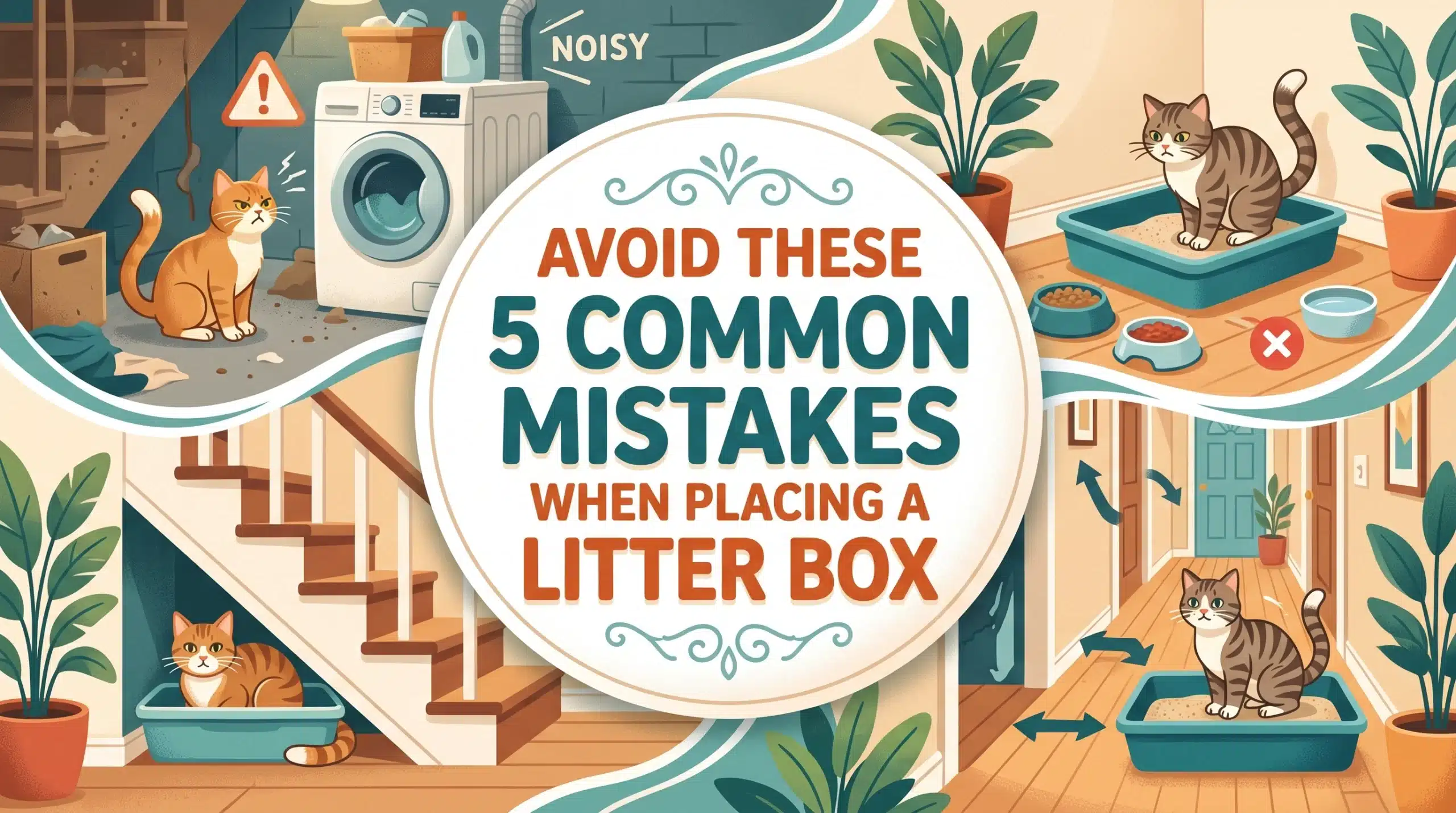
Let’s start with one of the biggest mistakes: placing the litter box in a high traffic area.
-
Place the litter box in a quiet, low-traffic area to help your cat feel safe and reduce stress.
-
Keep the litter box at least 6 to 10 feet away from food and water bowls to maintain hygiene and respect your cat’s instincts.
-
Provide multiple litter boxes for homes with more than one cat to prevent territorial conflicts and encourage healthy habits.
High-Traffic Areas
Why Busy Spots Stress Cats
Cats value privacy and security when they use their litter box. If you place the box in a high-traffic area, your cat may feel exposed and anxious. This stress can lead to litter box avoidance, which often results in accidents around your home. You might notice your cat hesitating or searching for other places to relieve itself. Cats naturally seek out quiet, low-traffic spaces for elimination. When you ignore this preference, you risk creating behavioral problems and increasing your cat’s stress levels.
Tip: Observe your cat’s behavior. If your cat seems hesitant or avoids the litter box, the location may be too busy or noisy.
Finding a Quiet Location
You can improve your cat’s comfort by choosing the best places to put a litter box. Look for areas that offer privacy and reduce disturbances. The best places to put a litter box often share these features:
-
Quiet spots away from loud appliances like washing machines or dishwashers
-
Locations with minimal foot traffic, so your cat feels safe
-
Well-ventilated rooms, ideally near a window or with good airflow
-
Dry areas that prevent bacterial growth and control odors
-
Corners of rooms or spaces under furniture, which provide a semi-private environment
When you select the best places to put a litter box, you help your cat feel secure and encourage consistent litter box use. This simple change can support your cat’s well-being and keep your home cleaner.
Near Food and Water Bowls
Why Separation Matters
You should always keep your cat’s litter box away from food and water bowls. Placing these items too close together can create several problems for both you and your cat. Cats have strong instincts that guide their behavior. They prefer to eat and drink in a clean, safe space, far from where they eliminate. If you ignore this need, you may notice your cat feeling anxious or even refusing to use the litter box.
Placing a litter box near food and water can lead to hygiene issues. Bacteria and odors from the litter box may contaminate your cat’s meals, increasing the risk of illness. Stress and anxiety can also develop when your cat cannot separate eating from eliminating. This stress may cause behavioral changes, such as avoiding the litter box or refusing to eat.
Best Practices for Placement
To support your cat’s health and happiness, you should always separate the litter box from food and water bowls. Most experts recommend keeping at least 6 to 10 feet between these areas. This distance helps prevent contamination and respects your cat’s natural instincts. When you look for the best places to put a litter box, choose a spot that is private, quiet, and far from feeding stations.
-
Place food and water bowls in a different room if possible.
-
Use a corner or a separate area for the litter box.
-
Make sure the litter box is easy for your cat to access but not in the path of daily activities.
Following these guidelines will help you create a cleaner, healthier environment for your cat. You will also reduce the risk of accidents and encourage regular litter box use.
Hard-to-Reach Spots
Accessibility for Cats and Owners
You might think that hiding a litter box in a closet or behind furniture keeps your home tidy, but this approach can create problems for both you and your cat. Cats often become confused when their litter box sits in a hard-to-reach location. This confusion may lead your cat to eliminate outside the box. You may also struggle to maintain a litter box that is difficult to access. Neglecting regular cleaning can result in a dirty or smelly environment. Covered litter boxes placed in cramped spots are easy to forget, which increases the risk of accidents and odor buildup.
Tip: Choose a location that allows you to scoop and clean the box daily. Consistent maintenance keeps the area inviting for your cat and reduces unpleasant smells.
Best Places to Put a Litter Box
You can avoid these issues by selecting accessible, private, and well-ventilated areas. Feline experts recommend the best places to put a litter box share these features:
-
Multiple boxes in different areas, especially in homes with more than one floor
-
Private spots where your cat will not be disturbed, with good lighting and quiet surroundings
-
Well-ventilated rooms that help control odors and moisture
A well-placed litter box encourages your cat to use it consistently. Proper placement reduces accidents and minimizes cleaning efforts. Cats prefer clean areas for elimination. Mild odors can deter your cat from using the box. Regular scooping and cleaning maintain an inviting environment. When you select the best places to put a litter box, you support your cat’s health and make your own routine easier.
Poor Ventilation and Odor
Airflow and Smell Control
You need to pay close attention to airflow when choosing a spot for your cat’s litter box. Poor ventilation allows odors to build up quickly. This not only makes your home less pleasant but also discourages your cat from using the box. Cats have sensitive noses. Strong smells can drive them away from their litter box and lead to accidents elsewhere.
-
Poor ventilation lets odors accumulate in the air, making the smell stronger.
-
Stronger odors can cause your cat to avoid the litter box.
-
Good airflow disperses odors and brings in fresh air, which helps keep the area clean.
The Center for Disease Control (CDC) recommends increasing ventilation to reduce indoor air pollutants, including odors and allergens.
You should place the litter box in a well-ventilated area. Rooms with windows or ventilation fans work best. Avoid cold, damp, or drafty spots, as cats prefer comfortable environments. Never put the box in a humid basement, since moisture encourages bacteria and odor.
Avoiding Tight, Enclosed Spaces
Tight or enclosed spaces may seem like a good way to hide the litter box, but they often trap odors and make cleaning difficult. Your cat may feel trapped or uncomfortable in these spots. Choose open areas with enough space for your cat to enter, turn around, and exit easily.
-
Select a location with good airflow, such as near a window.
-
Avoid closets, cabinets, or small bathrooms with poor ventilation.
-
Make sure you can reach the box easily for daily cleaning.
Proper placement and airflow help control odors and keep your cat happy and healthy.
Ignoring Multi-Cat Needs
Multiple Litter Boxes
You need to consider the unique needs of each cat in your home. Cats value their own space, especially when it comes to elimination. If you place only one litter box for several cats, you risk territorial conflicts and stress. Vets recommend following the “n+1” rule for litter boxes. This means you should provide one more box than the number of cats in your household.
-
For two cats, place three litter boxes.
-
For three cats, set up four litter boxes.
-
Always add an extra box for each additional cat.
This approach gives every cat a clean, private space. You reduce competition and encourage healthy litter box habits. Ignoring this guideline can lead to accidents, increased stress, and even health risks if cats avoid the box due to bullying or guarding behavior.
Tip: Place each litter box in a different location to prevent crowding and ensure easy access for all cats.
Preventing Territorial Issues
Cats see their litter box as a personal safe zone. When you force them to share, you may trigger dominance struggles and anxiety. Proper placement and quantity of boxes help prevent these problems. The table below shows how different factors affect territorial behavior:
|
Factor |
|
|---|---|
|
Litter Box as Personal Space |
Cats view their box as a safe zone, leading to anxiety if shared. |
|
Dominance Hierarchy |
A dominant cat can intimidate others, causing avoidance. |
|
Placement of Boxes |
Proper placement reduces conflicts and encourages use. |
To prevent disputes, use these strategies:
-
Observe your cats’ interactions around litter boxes.
-
Provide vertical space with cat trees and shelves.
-
Separate feeding areas to reduce competition.
-
Use pheromone diffusers to calm stressed cats.
-
Maintain consistent routines for feeding, play, and cleaning.
-
Place multiple litter boxes in different locations.
If you ignore multi-cat needs, you may see territorial conflicts, increased stress, and health risks. You can create a peaceful environment by meeting each cat’s needs and following best practices for litter box placement.
Noisy or Disturbing Locations
Avoiding Appliances and Vibrations
You should never place your cat’s litter box near noisy appliances or sources of vibration. Cats have extremely sensitive hearing. Mechanical sounds from washing machines, dryers, or HVAC systems can startle them and cause stress. This stress often leads to litter box avoidance or accidents elsewhere in your home. Senior cats, rescued cats, and naturally timid cats feel these effects even more strongly.
Common noisy or disturbing locations include:
-
Laundry rooms with washing machines and dryers
-
High-traffic areas such as kitchens or hallways
-
Damp spaces like basements or garages
Cats rely on their acute sense of hearing for safety. Sudden loud noises near the litter box can create a negative association, making your cat feel unsafe and vulnerable.
The table below shows how different locations can impact your cat’s litter box usage:
|
Location Type |
Impact on Usage |
|---|---|
|
High-traffic areas |
Can make a cat avoid the box |
|
Laundry rooms |
Can make a cat avoid the box |
|
Rooms with no easy escape |
Can make a cat avoid the box |
|
Near cat doors or flaps |
Can make a cat avoid the box |
|
Near children’s rooms |
Can make a cat avoid the box |
Creating a Calm Environment
You can help your cat feel secure by choosing a quiet, private spot for the litter box. A calm environment encourages regular use and reduces stress. Look for a location that offers:
-
Minimal noise and low foot traffic
-
Good ventilation and moderate temperature
-
Visibility of surroundings so your cat feels safe
Keep the litter box extremely clean by scooping daily and changing the litter often. Place the box away from appliances, air ducts, and other pets. Select a comfortable spot your cat already frequents. When you create a peaceful setting, you support your cat’s health and encourage positive litter box habits.
You support your cat’s health and your own peace of mind by choosing the right litter box location. Consider these benefits:
-
Calm, accessible spot
-
Litter your cat prefers
-
Good ventilation
Use this checklist:
-
Accessible 24/7
-
Well-ventilated
-
Away from food and noise
Small changes can make a big difference:
FAQ
How often should you move your cat’s litter box?
Try not to move your cat’s litter box often. Cats like routine, and a sudden change can make them confused or stressed. Only move the box when the current spot is noisy, hard to reach, too close to food, or causing accidents.
If you need to move it, do it slowly. Shift the box a little closer to the new spot each day, or place a second box in the new location while keeping the old one available for a short time. This gives your cat time to adjust without feeling forced.
What if your cat stops using the litter box after a move?
First, check the new location. Make sure it is quiet, easy to access, well ventilated, and away from food, water, loud appliances, and busy walkways. Cats may avoid the box if the new spot feels unsafe or uncomfortable.
Keep the box very clean and use the same litter your cat already knows. You can also place the box back in the old spot for a few days, then move it gradually. If your cat still avoids the box, or you notice signs like straining, crying, or frequent trips, contact your vet. A health issue could be part of the problem.
Can you use a covered litter box in a small apartment?
Yes, you can use a covered litter box in a small apartment, but it depends on your cat’s comfort. Some cats like the extra privacy. Others feel trapped or dislike the smell that can build up inside a covered box.
If you choose a covered box, make sure it is large enough for your cat to turn around easily. Place it in a spot with good airflow and scoop it every day. If your cat hesitates, avoids the box, or has accidents nearby, try an open litter box instead. Your cat’s preference matters most.

In her previous life, Lisa traveled extensively, both for work and leisure. After the pandemic struck, Lisa locked up her luggage and adopted a cat ever since.
Lisa is now an avid cat lover, she devotes most of her free time serving as butler to her adorable feline at home. When she is not with her cat, she can be seen using her phone sourcing for the latest cat supplies online.