Cats are obligate carnivores, so fruit should never replace meat based meals. Safe fruits are only occasional treats.
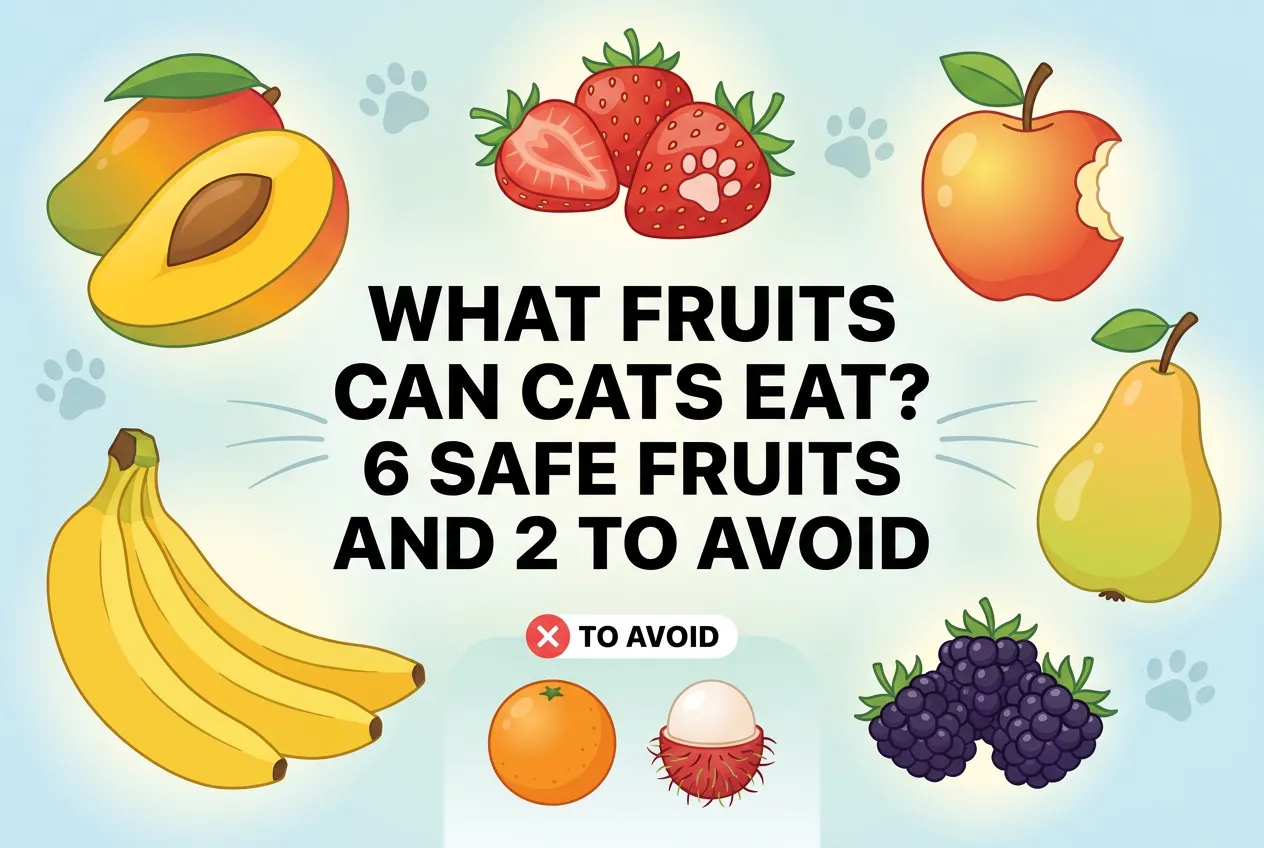
Wondering what fruits cats can eat? Some fruits are safe for cats in tiny amounts, including mango, strawberries, apples, bananas, pears, and blackberries. But fruit should only be an occasional treat. Cats need complete cat food as their main diet.
Always remove seeds, pits, cores, stems, peels, and large chunks before offering fruit.
Quick Answer: What Fruits Can Cats Eat?
Cats can eat a few plain fruits in very small pieces. The safest options from this list are mango, strawberries, apples, bananas, pears, and blackberries. Oranges are best avoided, and rambutan is not a good choice because of its sugar content and choking risk.
| Fruit | Safe For Cats? | Best Serving Size | Remove First | Main Risk |
|---|---|---|---|---|
| Mango | Yes, in tiny amounts | 1 to 2 pea sized cubes | Skin and pit | Sugar, choking, stomach upset |
| Strawberry | Yes, in tiny amounts | 1 thin slice, diced small | Stem and leaves | Stomach upset, soft stool |
| Apple | Yes, in tiny amounts | 2 to 3 pea sized cubes | Seeds, core, and thick peel | Unsafe seeds, choking |
| Banana | Yes, in tiny amounts | 1 thin slice, diced small | Peel | Sugar, weight gain |
| Pear | Yes, in tiny amounts | 2 to 3 pea sized cubes | Seeds, core, and thick peel | Soft stool, choking |
| Blackberry | Yes, in tiny amounts | Half a small berry, diced | Hard seed bits if visible | Gas, soft stool |
| Orange | Best avoided | None recommended | Peel, pith, and seeds | Citrus irritation |
| Rambutan | Better to avoid | None recommended | Skin and seed | Choking, blockage, sugar |
How Much Fruit Can A Cat Eat?
Fruit should be a tiny part of your cat’s treat allowance. A safe serving is usually one to three pea sized pieces. Many cats do better with no fruit at all, so fruit should never become a daily habit.
Keep all treats to less than ten percent of your cat’s daily calories. If your cat has diabetes, pancreatitis, weight issues, kidney disease, or a sensitive stomach, ask your vet before offering fruit. In many cases, skipping fruit is the safer choice. A small kitchen scale can help if you are trying to keep treats under ten percent of your cat’s daily calories.
How To Prepare Fruit For Cats
Good preparation matters more than the fruit itself. Even a safe fruit can become risky if it is served in large pieces or with unsafe parts still attached.
- Wash the fruit well.
- Remove seeds, pits, cores, stems, leaves, skin, and peels.
- Cut the fruit into pea sized pieces.
- Offer only one tiny piece the first time.
- Wait 24 to 48 hours before trying another new food.
- Stop if your cat vomits, has diarrhea, drools, gags, or acts unusually tired.
Can Cats Taste Sweet Fruit?
Cats do not taste sweetness the way people do. This is why many cats ignore fruit, lick it once, or play with it instead of eating it. If your cat is not interested, do not force it. There is no health reason to make a cat eat fruit.
Safe Fruits Cats Can Eat In Tiny Amounts
The fruits below are not needed in a cat’s diet, but they can be safe as rare treats when prepared properly.
Can Cats Eat Mango?
Yes, cats can eat mango in very small amounts. Ripe mango flesh is not toxic to cats, but it is sweet and should be treated as a rare snack only.
Before offering mango, wash it well, remove the skin, and discard the large pit. Cut the flesh into one or two pea sized cubes. Offer one piece first and watch your cat chew. Cats may swallow soft foods quickly, so small pieces are important.
Too much mango can cause vomiting, soft stool, or diarrhea because of the natural sugar and fiber. Mango is not a good choice for cats with diabetes, weight problems, pancreatitis, or sensitive digestion.
Best amount: 1 to 2 pea sized cubes, once a week at most.
Can Cats Eat Strawberries?
Yes, cats can eat strawberries in tiny amounts. Strawberries contain water and a little fiber, but they do not provide major health benefits for cats. Think of them as a small taste, not a nutrition boost.
Wash strawberries very well. Remove the leafy top and stem. Cut one thin slice into tiny pieces and offer a single piece first. Some cats may lick the juice and leave the rest. That is fine.
Too much strawberry can upset the stomach or cause soft stool. Cats with diabetes, weight issues, or chronic stomach problems should avoid strawberries unless a vet says otherwise.
Best amount: 1 thin slice, diced small, once a week at most.
Can Cats Eat Apple?
Yes, cats can eat apple flesh in tiny amounts, but the seeds and core must be removed. Apple seeds contain compounds that are unsafe for cats, and the core can be a choking risk.
Wash the apple well. Remove the core and every seed. Peel the apple if the skin is thick, waxy, or hard to chew. Cut the flesh into pea sized cubes before offering it.
Apple is firm, so size matters. Some cats may bat apple pieces around like toys before eating them. If your cat tends to gulp food, make the pieces extra small or skip apple.
Too much apple may cause gas, constipation, or soft stool. Avoid apple for diabetic cats or cats on strict weight plans.
Best amount: 2 to 3 pea sized cubes, once a week at most.
Can Cats Eat Bananas?
Yes, cats can eat a very small amount of banana. Banana is soft and easy to mash, but it is higher in sugar than many other cat treats.
Remove the peel. Slice off a very thin piece and cut it into pea sized bits. Offer one small piece first. Some cats may only lick it, while others may ignore it completely.
Banana should not be used to add vitamins or minerals to your cat’s diet. A complete cat food already does that better. Too much banana can add empty calories and may cause stomach upset.
Avoid banana for cats with diabetes, weight gain, pancreatitis, or sensitive digestion.
Best amount: 1 thin slice, diced small, once a week at most.
Can Cats Eat Pears?
Yes, cats can eat pear flesh in tiny amounts. Pear is similar to apple, but it is usually softer when ripe. The seeds and core still need to be removed.
Choose a ripe pear. Wash it well, remove the core, and take out every seed. Peel it if the skin feels thick or waxy. Cut the flesh into pea sized cubes.
Pear contains natural sugar and fiber, so large servings can cause loose stool. If your cat has a sensitive stomach, start with one tiny cube and wait a full day before offering anything new.
Pear is not a good choice for diabetic cats, overweight cats, or cats with chronic stomach issues.
Best amount: 2 to 3 pea sized cubes, once a week at most.
Can Cats Eat Blackberries?
Yes, cats can eat blackberries in very small amounts. Blackberries are not toxic to cats, but the seeds and texture can bother some cats.
Wash the berry well. Choose a ripe blackberry that is soft but not mushy. Slice it open and check for hard seed bits. Dice about half a small berry into tiny pieces and offer one piece first.
Some cats prefer to lick the juice and leave the pulp. That is normal. Do not hide fruit in other foods to make your cat eat it.
Too many blackberries may cause gas, soft stool, or stomach upset. Avoid them for cats with diabetes, pancreatitis, weight concerns, or sensitive digestion.
Best amount: Half a small blackberry, diced, once a week at most.
Fruits Cats Should Avoid
Some fruits are not worth the risk for cats. They may cause stomach irritation, choking, blockage, or more serious health concerns.
Can Cats Eat Oranges?
It is best to avoid oranges for cats. Cats do not need vitamin C from oranges, and citrus fruits can irritate a cat’s mouth and stomach.
The peel, pith, seeds, and citrus oils are the biggest concerns. Many cats also dislike the smell of citrus, which is a good sign to leave it alone.
If your cat licks a tiny drop of orange juice, it is usually not an emergency. Remove the fruit, offer fresh water, and watch for drooling, lip smacking, gagging, vomiting, or diarrhea. Call your vet if symptoms appear.
Best advice: Do not feed oranges to cats.
Can Cats Eat Rambutan?
Rambutan is better to avoid for cats. The ripe flesh is very sweet, and the large seed inside can be a serious choking or blockage risk. The hairy skin is not edible.
Even if the flesh itself is not known to be toxic, there is no real benefit for cats. The sugar content and texture risks make rambutan a poor treat choice.
If your cat swallows rambutan skin or seed, contact your vet right away. A blockage can be serious.
Best advice: Do not feed rambutan to cats.
Fruits Cats Should Never Eat
Readers often ask which fruits are safe, but it is just as important to know which fruits to avoid. Some fruits and fruit parts can be dangerous for cats.
| Fruit | Why Cats Should Avoid It |
|---|---|
| Grapes | Linked to serious kidney problems in pets. |
| Raisins | Same concern as grapes. |
| Lemons | Citrus oils can irritate cats. |
| Limes | Citrus oils can irritate cats. |
| Grapefruit | Citrus compounds may upset the stomach. |
| Cherries | Pits, stems, and leaves are unsafe. |
| Unripe tomato fruit | Can cause stomach upset. |
| Avocado | High fat and parts of the plant may be unsafe. |
Fresh Fruit Versus Canned, Dried, Or Juiced Fruit
If you give your cat fruit, plain fresh fruit is the safest choice. Processed fruit often has extra sugar, syrup, dairy, or other ingredients cats should not eat.
| Fruit Type | Safe For Cats? | Reason |
|---|---|---|
| Fresh plain fruit | Best option | Safe only when the fruit itself is cat safe and served in tiny pieces. |
| Canned fruit | Usually avoid | Often packed in syrup or juice with too much sugar. |
| Dried fruit | Usually avoid | Very sugary, sticky, and harder to chew. |
| Fruit juice | Not recommended | Concentrated sugar with little value for cats. |
| Fruit yogurt | Avoid | Often contains sugar and dairy, which can upset digestion. |
| Fruit desserts | Avoid | May contain sugar, cream, chocolate, sweeteners, or other unsafe ingredients. |
Can Kittens Eat Fruit?
Kittens should generally avoid fruit. Their bodies are growing fast, and they need balanced kitten food for proper nutrition. Fruit can upset a kitten’s stomach and does not add anything they need.
If you want to give a kitten a treat, ask your vet first. A kitten safe treat is usually a better choice than fruit.
What To Do If Your Cat Eats Unsafe Fruit
If your cat eats grapes, raisins, citrus peel, cherry pits, rambutan seed, or any large fruit pit, contact your vet right away. Do not wait for symptoms if the fruit may be toxic or could cause a blockage.
Watch for these warning signs after any unsafe food:
- Vomiting
- Diarrhea
- Drooling
- Gagging
- Loss of appetite
- Weakness
- Unusual sleepiness
- Belly pain
- Trouble passing stool
If symptoms appear, call your vet as soon as possible.
Signs Fruit Does Not Agree With Your Cat
Even safe fruits can bother some cats. Stop feeding fruit if you notice any reaction after a new food.
- Vomiting
- Diarrhea or soft stool
- Gas
- Drooling
- Lip smacking
- Pawing at the mouth
- Itching around the face
- Hives
- Unusual tiredness
Try only one new food at a time. This makes it easier to know what caused the reaction.
Better Treats Than Fruit For Cats
Fruit is optional for cats. If your goal is enrichment or bonding, there are better choices.
- Plain cooked chicken with no seasoning or dried chicken cat treats
- Plain cooked turkey with no seasoning or dried turkey cat treats
- Small pieces of freeze dried meat treats
- Wet cat food as a treat
- Food puzzles made for cats – for enrichment, a cat food puzzle is usually a better choice than fruit because it gives your cat something to work for without adding sugary snacks
- Interactive play with a wand toy – If your cat wants attention more than food, try a simple interactive wand toy instead of adding extra treats.
These options match a cat’s natural diet better than fruit.
FAQs About Cats And Fruit
Can cats eat fruit every day?
No. Fruit should not be a daily food for cats. It should only be an occasional treat, and many cats do better with no fruit at all.
What is the safest fruit for cats?
Small pieces of mango, strawberry, apple, banana, pear, or blackberry can be safe when prepared correctly. The best choice depends on your cat’s health and digestion.
Can cats eat fruit skin?
It is better to remove fruit skin. Skin can be hard to chew, may carry residue, and can upset the stomach. Always remove mango skin, citrus peel, rambutan skin, and thick or waxy apple or pear skin.
Can cats eat fruit seeds?
No. Seeds and pits should be removed. Some are unsafe, and others can cause choking or blockage.
Can diabetic cats eat fruit?
Usually no. Fruit contains natural sugar. Diabetic cats should avoid fruit unless a vet says it is okay.
Can cats eat canned fruit?
Canned fruit is not recommended. It is often packed in syrup or juice and has too much sugar for cats.
Can cats drink fruit juice?
No. Fruit juice is not a good choice for cats. It contains concentrated sugar and does not provide useful nutrition.
Why does my cat ignore fruit?
Many cats ignore fruit because they do not taste sweetness like people do. This is normal. Do not force your cat to eat fruit.
Final Verdict: Should Cats Eat Fruit?
Cats can eat some fruits in tiny amounts, but fruit is not needed for their health. Mango, strawberries, apples, bananas, pears, and blackberries can be safe when washed, peeled when needed, and cut into very small pieces.
Oranges are best avoided, and rambutan is not worth the risk. Grapes, raisins, citrus peels, cherry pits, and large fruit seeds or pits should never be given to cats.
If your cat enjoys a tiny fruit taste now and then, keep it plain, small, and rare. If your cat has health issues or a sensitive stomach, skip the fruit and choose a safer cat friendly treat instead.

In her previous life, Lisa traveled extensively, both for work and leisure. After the pandemic struck, Lisa locked up her luggage and adopted a cat ever since.
Lisa is now an avid cat lover, she devotes most of her free time serving as butler to her adorable feline at home. When she is not with her cat, she can be seen using her phone sourcing for the latest cat supplies online.