
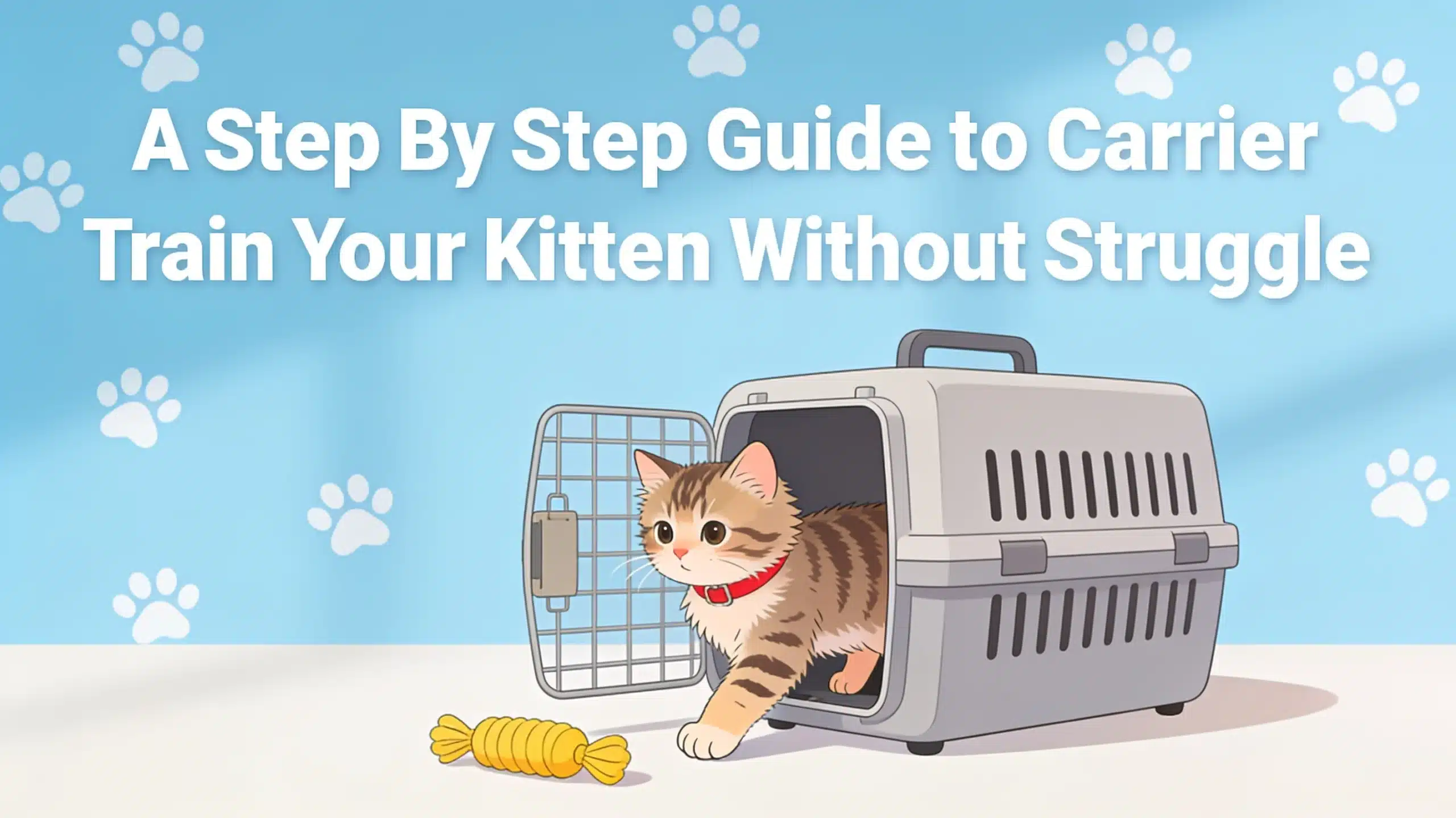
Kitten carrier training starts long before you need to leave the house. If your kitten runs under the sofa as soon as the carrier appears, they are not being difficult. They are reacting to an object that often shows up before car rides, vet visits, strange smells, and sudden changes. The good news is that the carrier can become something much calmer. Instead of forcing your kitten inside, you can help them see it as a normal part of the room. A quiet place to sniff, explore, and even rest in when nothing stressful is happening.
This guide walks you through a gentle setup that uses familiar placement, soft bedding, and safe home scent to build trust from the start.
First, let’s make the carrier the calmest place in the room.
Make the Carrier the Calmest Place in the Room
Your kitten darts under the sofa when you bring out the carrier. The carrier may be clean and sturdy, but your kitten sees a hard box that appears before car rides, vet visits, and other unfamiliar events. The goal is not to force your kitten inside. The goal is to change what the carrier means before you need to close the door.
The Cozy-Carrier First Impression Plan uses three simple controls: placement, bedding, and scent. Together, they make the carrier look, feel, and smell familiar. When you set it up correctly, your kitten can investigate it without hands reaching in, doors moving, or pressure building. By the end, you will know where to place the carrier, how to prepare its bedding, how to add safe familiar scents, and how to tell whether your kitten feels comfortable.
You will also have a practical setup you can use today, even if your kitten currently avoids the carrier.
Build the Cozy-Carrier First Impression Plan
Start with placement. Put the carrier in a quiet part of the room where your kitten already relaxes, such as beside a cat tree or near a favorite sleeping area. Keep it away from loud appliances, busy doorways, and places where people often step over it. Your kitten needs a clear view of the room and an easy escape route. If the carrier faces a wall or sits in a cramped corner, it can feel like a trap.
Leave the carrier door fully open. If the door swings and bumps the carrier, remove it temporarily or secure it safely so it stays still. A moving door can startle a kitten during the first inspection. Place the carrier on a stable surface or directly on the floor, depending on where your kitten normally spends time. Stability matters because a carrier that rocks or slides can make one cautious step feel unsafe.
Next, make the inside comfortable. Use a thin, washable towel or small fleece blanket that fits flat across the carrier floor. Avoid thick bedding that bunches under your kitten’s paws or reduces the available space. A kitten should be able to turn around, lie down, and stretch without pushing against the sides.
If the carrier has a wire door or a hard plastic floor, cover only the floor. Keep the doorway clear so your kitten can see out.
Use the following parts of the plan in order:
- Choose a calm location. Place the carrier where your kitten already spends time, because familiar surroundings reduce the number of new things your kitten must process at once.
- Make the carrier stable. Stop sliding, rocking, rattling, and door movement, because physical surprises can create a quick negative association.
- Add simple bedding. Use a thin towel or fleece with a familiar texture, because comfortable footing makes investigation easier.
- Add familiar scent. Place a worn cotton shirt or a small cloth carrying your kitten’s usual home scent near the bedding, because familiar smells help the carrier feel connected to home.
- Leave the entrance open. Keep the doorway clear and the door secured out of the way, because your kitten needs control over entering and leaving.
- Let your kitten choose the timing. Do not push, lift, or place your kitten inside during setup, because choice keeps the first contact calm.
For scent, choose familiar rather than strong. A small piece of your recently worn cotton shirt can work well if your kitten already sleeps near you. You can also rub a clean cloth gently over your kitten’s bedding and place that cloth inside the carrier. Do not spray perfume, air freshener, essential oils, or cleaning products inside the carrier. Strong smells can overwhelm a kitten, and some scented products can harm cats.
Keep food and toys separate from the basic setup at first. The carrier should become a comfortable resting option, not a container that suddenly fills with unfamiliar objects.
If your kitten already has a favorite small toy, place it just inside the entrance after the carrier has remained stable for a while. Ask yourself: does the carrier look like a quiet bed, or does it look like a new object crowded with things?
Simple usually works better.
The practical takeaway is clear: put the carrier in a familiar room, make the floor comfortable, add a home scent, and give your kitten a completely open doorway.
Apply the Setup Without Pressure
Use this example as a working plan for a kitten who currently walks away from the carrier. Suppose you have a 12-week-old kitten who hides when the carrier appears. Set the carrier on the living-room floor, 2 to 3 feet from the kitten’s usual sleeping mat. Remove the door if it rattles; otherwise, fasten it open so it cannot swing. Add one thin towel and a small cloth rubbed over the kitten’s sleeping mat.
Follow these steps:
- Prepare the carrier for 5 minutes. Wash and dry the carrier if it smells like storage or cleaning products. Let it air out completely. Add the towel and familiar cloth only after the carrier has no strong smell.
- Place it during a calm period. Set it out after play or a meal, when your kitten has less energy for racing around. Do not bring it out immediately before leaving home.
- Give the kitten 10 minutes of space. Sit several feet away and continue a quiet activity. Avoid staring at the carrier or calling your kitten toward it. Your relaxed behavior keeps the carrier from becoming a special source of pressure.
- Watch for investigation. Your kitten may look at the carrier, sniff the entrance, walk around it, or place one paw inside. These actions count as progress because they show curiosity without panic.
- Keep the door open for at least 3 days. Leave the setup in place during normal household activity. Each day, check that the towel stays flat, the carrier remains stable, and the scent item still smells familiar rather than strong.
- Refresh only when needed. Wash the towel when it becomes dirty, but replace it with another familiar-smelling item rather than a freshly perfumed one. Avoid changing the location at the same time, because too many changes make it harder to tell what your kitten accepts.
- Measure comfort by behavior. A kitten who enters, settles for a few seconds, grooms, naps, or returns voluntarily shows stronger comfort than a kitten who rushes in and out after being lured.
Do not expect your kitten to sleep inside on the first day. A calm sniff or a single paw inside gives you useful information. If your kitten enters for 3 seconds on day one and rests inside for 2 minutes on day three, the setup is working even if your kitten still chooses other sleeping spots.
Quick checklist
☑️Place the carrier in a quiet, familiar room.
☑️Keep it 2 to 3 feet from an existing resting area.
☑️Remove or secure the door so it cannot swing.
☑️ Add one thin towel or fleece layer.
☑️Add a small cloth with a familiar home scent.
☑️ Keep the entrance fully open.
☑️ Avoid perfume, essential oils, and strong cleaners.
☑️ Leave the carrier in place for at least 3 days.
☑️ Watch for sniffing, pawing, entering, resting, or grooming.
☑️ Change one detail at a time if your kitten avoids it.
After each observation, ask yourself one question: did my kitten move away because of the carrier itself, or because something about the setup changed? That answer points to the next adjustment.
Fix the Setup When Your Kitten Avoids It
The carrier sits in a busy place
A carrier beside the front door may seem convenient, but footsteps, keys, deliveries, and opening doors can interrupt every investigation. Your kitten may approach, hear a sudden sound, and decide that the carrier predicts danger.
Do this: Move the carrier to a quiet corner of a room your kitten uses daily. Keep the entrance facing the open room, not directly toward a wall. Watch for one full hour during normal household activity. If your kitten can approach without repeated startling, keep that location.
Not this: Do not place the carrier in a closet, laundry area, or narrow hallway just because those spaces look tidy. A hidden carrier gives your kitten no chance to build calm familiarity.
The bedding smells too new
A newly washed blanket may smell clean to you but unfamiliar to your kitten. Strong detergent, fabric softener, or dryer sheets can make the carrier smell unlike the rest of your home. Your kitten may sniff the entrance and back away.
Do this: Use a plain towel washed with unscented detergent, or rub a clean cloth over the kitten’s regular sleeping area before placing it inside. Use only a small amount of familiar scent. If the carrier still smells strong, wash it with mild unscented soap, rinse it well, and let it air-dry completely.
Not this: Do not add several scented items, sprays, or essential oils to “make it cozy.” More scent does not mean more comfort. It can make the carrier harder for your kitten to tolerate.
The carrier feels like a hiding trap
A kitten may enter partway, notice the door behind it, and retreat if the doorway feels blocked or the interior feels too dark. This often happens when owners place bedding over the entrance or leave the door hanging inside.
Do this: Keep the doorway clear, secure the door fully open, and use bedding that lies flat. Check that your kitten can turn around without catching claws on fabric. If the carrier has a solid top and your kitten prefers more visibility, place it where light reaches the entrance and the room remains easy to see.
Not this: Do not lift your kitten into the carrier to “show” that it is safe. That action removes choice at the exact moment your kitten needs control. If your kitten backs away, pause and adjust the setup instead.
Your kitten enters only when no one watches
That behavior still counts as success. Some kittens investigate when the room becomes quiet. Avoid moving the carrier or adding new items simply because you have not seen an entry. Check for shifted bedding, paw marks, or a kitten resting nearby.
Do this: Use a phone camera from across the room if you need to confirm visits, or place a small piece of paper near the entrance and check whether it moves. Keep the setup unchanged for another day or two.
Not this: Do not wait beside the carrier and repeatedly call your kitten inside. Attention can turn a private investigation into a pressured task.
A safe carrier does not need to become your kitten’s only bed. It needs to become an ordinary, comfortable option that remains available when nothing stressful is happening. Stable placement, flat bedding, and a light familiar scent create that message every day: this space belongs in the home, and entering it does not cause anything bad. When your kitten chooses the carrier calmly, you have built the foundation for low-stress travel without a struggle.
Final Thoughts
After using the above method, your kitten won’t just “endure” the carrier – you’ll make it a familiar, rewarding place that they choose to approach. One specific technique you’ll use right away is pairing the carrier with good things through gentle, no-pressure sessions that end before your kitten gets overwhelmed.
Your first action: place the carrier in your home this week and start with a 2-minute “sniff-and-treat” session today, then repeat once tomorrow.
Keep it short and positive, and let the process lead, this method works best when you start small and stay consistent.

In her previous life, Lisa traveled extensively, both for work and leisure. After the pandemic struck, Lisa locked up her luggage and adopted a cat ever since.
Lisa is now an avid cat lover, she devotes most of her free time serving as butler to her adorable feline at home. When she is not with her cat, she can be seen using her phone sourcing for the latest cat supplies online.