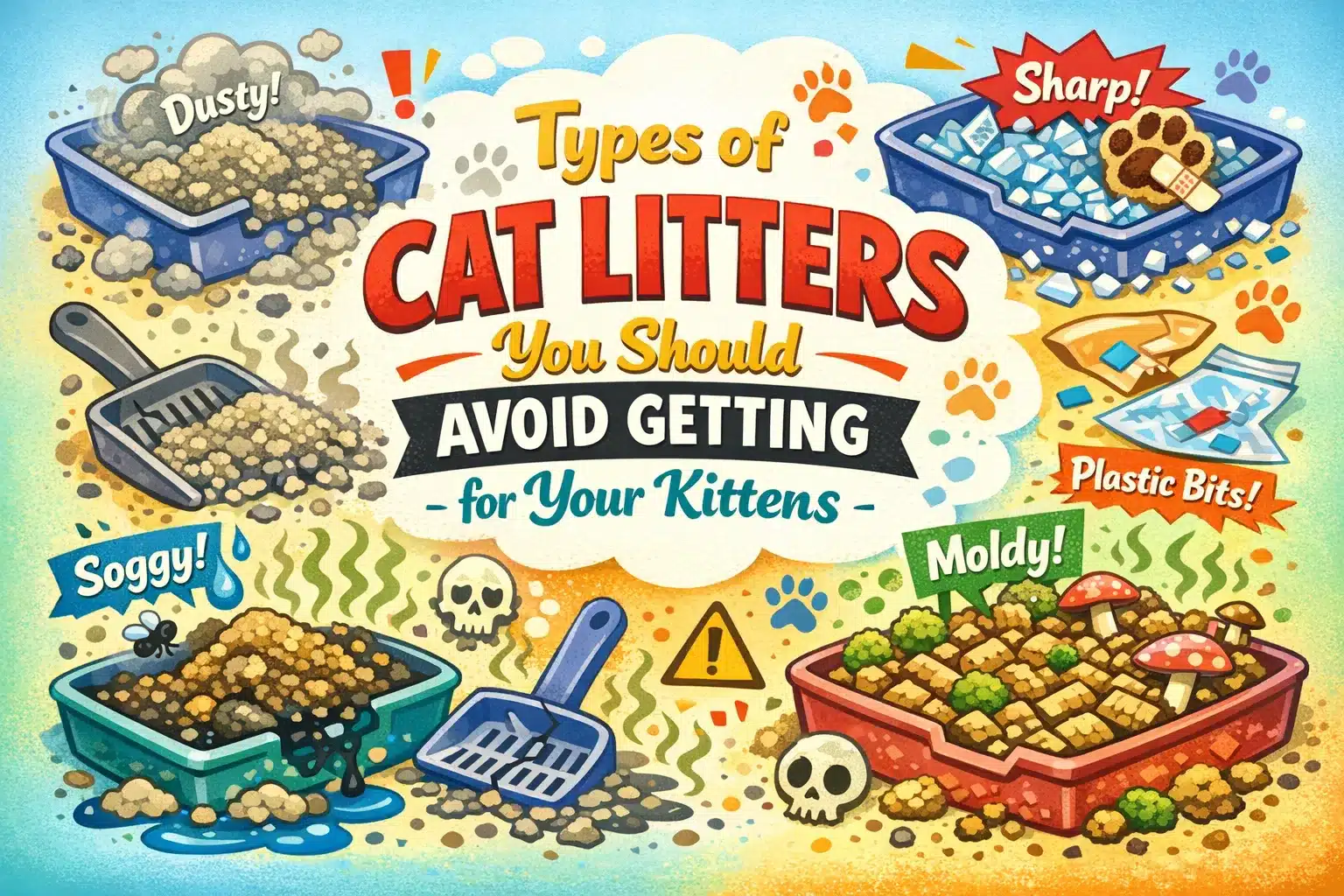
You want your kitten to stay healthy and safe. Some cat litters pose real dangers, especially for young cats. Ingesting clay-clumping litter can cause intestinal blockages. Dust from litter may harm breathing and trigger allergies. Scented litters expose kittens to chemicals. Pellet litters may become choking hazards.
Learn what cat litter to avoid for kittens.
-
Avoid clumping cat litter for kittens. It can cause intestinal blockages if ingested.
-
Steer clear of silica cat litter. Its dust can harm your kitten’s breathing and lead to respiratory issues.
-
Choose unscented and chemical-free litter. This helps prevent allergies and keeps your kitten comfortable.
What Cat Litter to Avoid for Kittens
Choosing the right cat litter for your kitten is essential for their health and comfort. You may notice that kittens explore their environment by sniffing, digging, and sometimes tasting objects. This behavior makes them more vulnerable to the risks associated with certain types of cat litter. Understanding what cat litter to avoid for kittens helps you prevent serious health issues, including ingestion, respiratory problems, allergies, and toxicity.
You can protect your kitten by learning about the dangers of clumping, silica, scented, and chemically treated cat litters, as well as other unsafe options.
Clumping Cat Litter Risks
Clumping cat litter, especially those made from sodium bentonite clay, poses significant risks for kittens. You may think clumping litter makes cleaning easier, but kittens often ingest litter while grooming or playing. This can lead to digestive problems and even intestinal blockages. Kittens under 12 weeks face the highest risk, so you should avoid clumping cat litter for young cats.
Here is a table summarizing the documented risks of clumping cat litter ingestion:
|
Risk Type |
Description |
|---|---|
|
Gastrointestinal Upset |
Large ingestion can lead to GI upset. |
|
Constipation |
Clumping nature may cause constipation. |
|
Age Risk Factor |
Risk decreases as cats mature. |
Veterinary literature frequently reports clumping cat litter as unsafe for kittens. You should choose a safe litter that does not clump, especially for kittens younger than three months. Clay litter also produces dust, which can cause respiratory issues. You may experience coughing or shortness of breath if you use clay litter in your home.
Silica Cat Litter Hazards
Silica cat litter contains tiny crystals that absorb moisture and control odor. However, silica dust can harm your kitten’s respiratory system. When your kitten digs in the litter box, they may inhale silica dust, which can cause coughing, wheezing, and shortness of breath.
Long-term exposure increases the risk of severe respiratory problems.
-
Inhaling silica dust can lead to coughing.
-
Wheezing may occur after exposure.
-
Shortness of breath is a potential effect.
-
Long-term exposure could result in more severe respiratory problems.
Silica dust is classified as a carcinogen, especially in high or repeated exposures. You should avoid silica cat litter for kittens and select a safe litter that produces minimal dust.
Scented Cat Litter Concerns
Scented cat litter may seem appealing because it masks odors, but it contains artificial fragrances and chemical deodorizers. These chemicals can irritate your kitten’s sensitive respiratory system. You may notice your kitten hesitating before using the litter box, sneezing, or coughing. Over time, discomfort can lead to litter box avoidance, resulting in messes around your home.
-
Artificial fragrances and chemical deodorizers can irritate a cat’s respiratory system.
-
Kittens may show signs of discomfort such as hesitation before using the litter box, sneezing, or coughing.
-
Discomfort can lead to avoidance of the litter box, resulting in messes.
You should avoid scented cat litter and choose a safe litter that is unscented and free from harsh chemicals.
Chemical Additives in Cat Litter
Many cat litter brands use chemical additives to improve clumping, odor control, or appearance. These additives can be toxic or harmful to kittens. Sodium bentonite clay creates dust and is not digestible if ingested. Synthetic binders may cause irritation and pose ingestion risks.
Silica dust is especially harmful in high or repeated exposures.
|
Toxic Additive |
Description |
|---|---|
|
Sodium bentonite clay |
Widely used, creates dust, not digestible if ingested, risky for kittens. |
|
Synthetic binders |
Used in non-clay litters, may cause irritation and pose ingestion risks. |
|
Silica dust |
Classified as a carcinogen, especially harmful in high or repeated exposures. |
You should avoid cat litter with chemical additives and select a safe litter made from natural materials.
Other Unsafe Kitten Litter Types
Some non-traditional cat litter types also pose risks for kittens. Strong-scented wood pellets can contain artificial chemicals that harm sensitive respiratory systems. Pellet litters may become choking hazards if your kitten tries to eat them. Newspaper litter, while used historically, can have sharp edges and may contain harmful chemicals from bleaching and inks.
-
Scented litters can contain artificial chemicals harmful to kittens with sensitive respiratory systems and may deter them from using the litter box due to overpowering scents.
-
Pellet litters pose a choking risk for kittens, as they may attempt to eat the pellets, leading to potential airway obstruction.
-
Newspaper litter can have sharp edges and may contain harmful chemicals from bleaching and inks, posing unknown long-term risks.
You should avoid these types and choose a safe litter that is soft, dust-free, and free from strong scents or chemicals. When you consider what cat litter to avoid for kittens, focus on preventing ingestion, respiratory issues, allergies, and toxicity. You can keep your kitten healthy by choosing a safe litter that is natural, unscented, and free from harmful additives.
Kitten-Safe Litter Options
You want your kitten to thrive in a safe and comfortable environment. Choosing the right kitten-safe litter makes a big difference for your pet’s health. Many veterinary professionals recommend using litter with nontoxic ingredients, low dust, and no added fragrance. These options help you avoid the risks of ingestion, respiratory irritation, and allergies. You can find several types of kitten-safe litter that support your kitten’s well-being and make cleaning easy for you.
Natural Kitten Litter Choices
Natural kitten litter uses nontoxic ingredients like pine, corn, tofu, grass, or wheat. These materials break down easily and do not release harmful dust. Studies show that biodegradable litters, such as those made from cassava or corn, absorb moisture well and control odor naturally. You support your kitten’s instincts and reduce irritation by choosing natural litter.
Here is a table of popular kitten-safe litter types:
|
Litter Type |
Clumps |
Kitten-Safe |
Example Product |
|---|---|---|---|
|
Pine |
No |
Yes |
Feline Pine Original Cat Litter |
|
Corn |
Yes |
Yes |
World’s Best Cat Litter |
|
Tofu |
Yes |
Yes |
Tuft & Paw Really Great Cat Litter |
Paper-Based Kitten Litter
Paper-based kitten litter is soft, dust-free, and made from nontoxic ingredients. You protect your kitten’s sensitive paws and lungs with this choice. Paper pellets absorb liquid well and do not contain chemical additives. For kittens under eight weeks, paper-based litter is the safest option.
You can find brands like Ökocat Paper Pellet Cat Litter that offer reliable performance.
Unscented and Chemical-Free Kitten Litter
You should always choose unscented and chemical-free kitten litter. These products improve air quality and reduce the risk of allergies or asthma. Unscented litter creates a comfortable environment and prevents litter box avoidance. Look for litter with nontoxic ingredients and a soft texture to protect your kitten’s paws. Plant-based and paper litters often meet these standards. By selecting kitten-safe litter with nontoxic and nontoxic ingredients, you give your kitten the best start in life.
You should avoid litters with silica dust, chemical additives, or sodium bentonite. These materials can cause breathing issues, allergies, or blockages in kittens.
|
Reason for Concern |
|
|---|---|
|
Silica dust |
Can cause respiratory issues in kittens. |
|
Chemical additives |
May lead to allergic reactions or illness. |
|
Sodium bentonite |
Can block intestines if ingested. |
Choose low-dust, fragrance-free, or natural litter to protect your kitten’s health. If you feel unsure, ask your veterinarian for advice.

In her previous life, Lisa traveled extensively, both for work and leisure. After the pandemic struck, Lisa locked up her luggage and adopted a cat ever since.
Lisa is now an avid cat lover, she devotes most of her free time serving as butler to her adorable feline at home. When she is not with her cat, she can be seen using her phone sourcing for the latest cat supplies online.