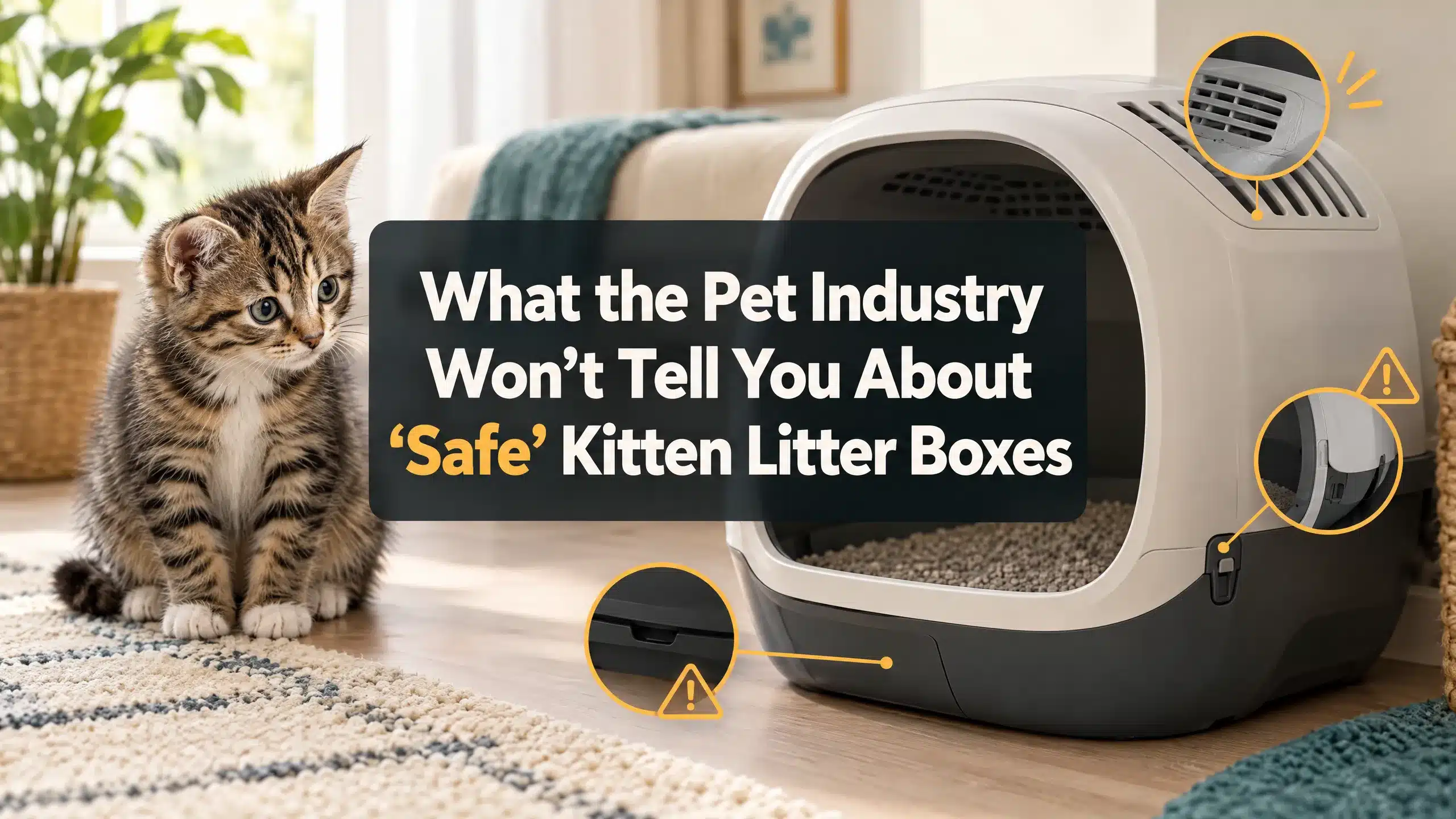
If you are shopping for your first kitten, the litter box aisle can feel surprisingly complicated. You will see covered boxes that promise privacy, automatic boxes that promise cleanliness, and products labeled especially for kittens. Each sounds helpful. But the safest litter boxes for kittens are not always the ones with the most features. What matters is whether your kitten can get in easily, feel comfortable using the box, and return to it without hesitation.
A kitten is still learning where to go and what to expect. If the sides are too high, getting into the box may be difficult. If a lid holds in odors or limits the view of the room, some kittens may feel uneasy inside.
A box that makes noise or moves unexpectedly could also startle a kitten. These details are easy to overlook when a product looks neat and convenient to you.
The litter and your daily routine matter just as much as the box. An unscented litter may be easier for a kitten to accept than one with a strong fragrance. Regular scooping keeps the box inviting and gives you a chance to notice changes in your kitten’s bathroom habits.
No label can tell you as much as watching how your kitten responds.
You do not need to assume every covered or automatic box is unsafe. You do need to ask what each feature does for your kitten, rather than what it promises on the package. That question is especially useful when you look at one of the most common claims about kitten litter boxes: that an enclosed box must be the safer choice.
1. The “Enclosed Box Is Safer” Myth Might Actually Be Backward
Walk into any pet store and you’ll see enclosed, hooded litter boxes marketed with language suggesting they’re somehow more protective and safer for kittens. The logic sounds reasonable on the surface — a contained space keeps mess inside and feels cozy. But consider this from a kitten’s perspective.
Kittens are prey animals at heart. Even in a domesticated home, their instincts tell them to be aware of their surroundings, especially during vulnerable moments like elimination. An enclosed box traps odors intensely inside, and what smells faintly unpleasant to us can be genuinely overwhelming to a kitten’s far more sensitive nose. Imagine if every time you used the bathroom, the smell was concentrated and inescapable around you — would that feel safe?
Beyond the sensory issue, enclosed boxes create a single exit point. A kitten that feels cornered or startled inside an enclosed box has nowhere to go. Open, low-sided boxes actually give kittens better situational awareness and escape routes, which aligns more naturally with their instinctive comfort needs. The “safer” enclosed box might actually be creating low-grade anxiety that accumulates over time.
The real question worth asking is: safer for whom? Often, enclosed boxes are safer for the owner’s aesthetic preferences — not necessarily for the kitten’s psychological wellbeing.
2. Premium “Dust-Free” Litters May Be Creating a False Sense of Security
The dust-free litter category has exploded in popularity, largely driven by legitimate concerns about respiratory health in small kittens. And yes, excessive dust is genuinely problematic. But here’s where the contrarian lens becomes useful: the marketing around “dust-free” often obscures a more complicated picture.
Many premium litters marketed as dust-free rely on synthetic fragrances, binding agents, and chemical compounds to achieve their texture and clumping properties. A kitten that is brand new to the world is also brand new to chemical exposure. Their systems are still developing, and their grooming habits mean that whatever coats their paws goes directly into their mouths.
Picture this scenario: a kitten using an ultra-processed, heavily fragranced litter dozens of times per week from the age of eight weeks. The cumulative ingestion of those compounds during a critical developmental window is rarely discussed in the conversations about respiratory safety. The industry successfully narrowed the conversation to one variable — dust — while leaving the chemical composition question largely unexamined by everyday consumers.
Sometimes the simpler, less-marketed option deserves more consideration than the premium packaging suggests. Plain, unscented, minimally processed options might serve developing kittens better than the industry’s top sellers.
3. The Obsession With Box Size Recommendations Is Often Misguided
The standard advice states that a litter box should be one and a half times the length of your cat. For kittens, this usually translates into recommendations for smaller, kitten-specific boxes. But this well-intentioned guidance may actually work against the kitten’s long-term behavioral development.
Consider what we know about how kittens learn. They are in a rapid socialization and habituation window during their earliest weeks in a home. The behaviors and environmental associations they form early tend to become deeply embedded. A kitten trained on a tiny, kitten-specific box must eventually transition to a full-sized box — a transition that many owners underestimate as a source of later litter box avoidance issues.
The argument for starting with an appropriately low-sided but full-sized box is actually quite strong. The entry barrier for a small kitten can be addressed with a simple notch cut into the side of the box or a ramp made from a book or folded mat. Meanwhile, the kitten grows into a spatial relationship with a box that will serve them throughout their life, avoiding the disorientation of a significant change later.
Kitten-specific products are often more about creating a separate purchase category than about genuinely serving the animal’s developmental needs. That’s a commercial reality worth keeping in mind when navigating the pet product landscape.
4. Self-Cleaning Litter Boxes Sold as “Safer” May Introduce More Variables, Not Fewer
Self-cleaning litter boxes represent one of the most aggressively marketed categories in the pet space, and they’re often positioned as the responsible, health-conscious choice. The pitch makes intuitive sense — cleaner box, fewer bacteria, healthier kitten. But the contrarian case against them for kittens specifically is worth taking seriously.
Imagine if you were a small kitten and the floor beneath you suddenly moved, whirred, or emitted a mechanical sound with no warning. Kittens are in a formative period where negative experiences with elimination can create lasting aversions. A single frightening encounter with a self-cleaning mechanism activating at the wrong moment can be enough to create litter box avoidance that persists for years — or permanently.
Beyond the behavioral risk, self-cleaning boxes typically require specific litter types to function, often litters that are proprietary and heavily processed. The owner’s control over what their kitten is actually exposed to diminishes significantly. And the mechanical complexity of these devices means more components that can malfunction, creating inconsistency in the kitten’s environment.
There’s also a monitoring dimension that gets lost. Manually scooping a litter box is one of the most reliable ways to track a kitten’s health — changes in elimination frequency, consistency, and volume are early indicators of health issues. Automate that process away and you lose a genuinely valuable health monitoring tool that no technology currently replaces with equivalent sensitivity.
5. The Entire “Kitten-Safe” Product Category Deserves Skeptical Scrutiny
Step back and look at the kitten litter box safety conversation from the widest possible angle, and a pattern emerges that should prompt genuine critical thinking. The pet industry has a strong commercial incentive to segment the market, creating kitten-specific versions of products that adults already use — and charging a premium for the distinction.
When we ask “what is the safest litter box for a kitten,” we’re often asking a question that has already been framed for us by marketing. The word “safe” in product messaging typically means safe from liability claims and safe for brand reputation, not necessarily optimized for feline developmental biology.
The most genuinely kitten-safe setup might be remarkably simple: a low-sided, open box, made from a material with no chemical off-gassing, filled with an unscented, minimally processed litter, placed in a quiet location with multiple escape routes, kept impeccably clean through daily manual scooping. None of those elements require a single specialized product purchase. They require knowledge and consistency.
The broader lesson here applies well beyond litter boxes. When an industry tells us that complexity and premium pricing equal safety, especially for vulnerable beings in our care, that’s precisely the moment to slow down and ask harder questions. The safest choice for your kitten might be the one the marketing ecosystem has the least financial interest in selling you.
Reconsidering our assumptions doesn’t mean dismissing all expert guidance — it means engaging with that guidance critically, filtering it through an understanding of who benefits from our beliefs, and ultimately returning to first principles about what a small, developing animal actually needs from its environment. That kind of thinking will serve both you and your kitten far better than any five-star reviewed product ever could.

In her previous life, Lisa traveled extensively, both for work and leisure. After the pandemic struck, Lisa locked up her luggage and adopted a cat ever since.
Lisa is now an avid cat lover, she devotes most of her free time serving as butler to her adorable feline at home. When she is not with her cat, she can be seen using her phone sourcing for the latest cat supplies online.