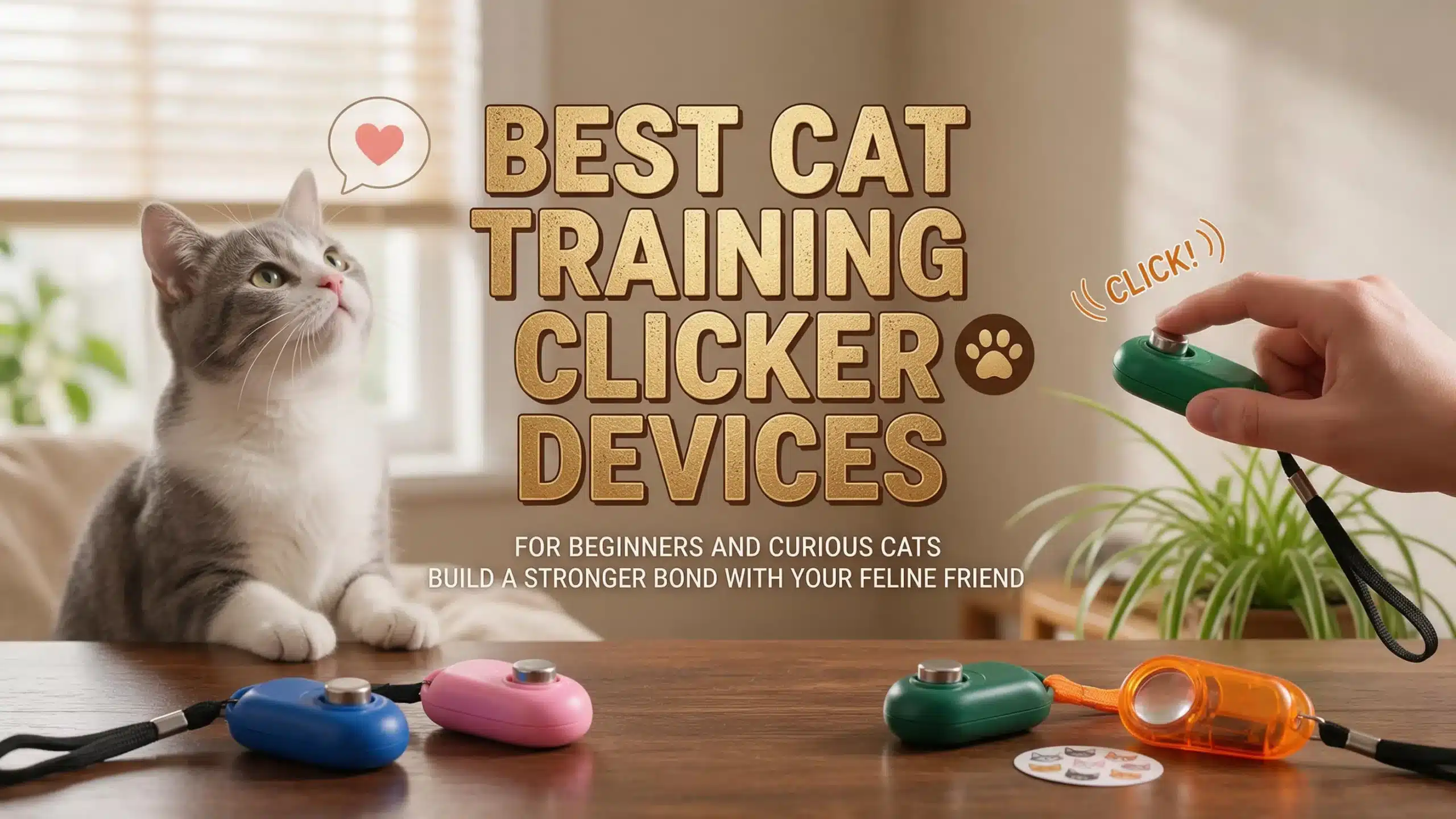
This guide covers seven beginner-suitable cat training clicker devices and the traits that actually matter: a clear, consistent sound, easy one-handed use, optional wrist strap or target stick, volume that does not startle, and simple durability. Timing plus rewards beat brand prestige every time. Full product details, a comparison table, and usage tips follow below.
-
Clear marker sound without panic volume
-
One-hand press you can time cleanly
-
Strap, ring, or target options matched to your cat
-
Short sessions and high-value treats over gadget collecting
Introduction to Cat Training Clickers
Cats treat human instructions like optional dinner theater until a treat appears. A training clicker is not a remote control for feline obedience. It is a small sound marker that pairs with a reward so you can highlight the exact moment your cat does something useful, from sitting to touching a target to walking into a carrier without a wrestling match.
This piece is for beginners and for people whose curious cats will investigate every gadget, pouch, and suspicious plastic square. You will get seven practical device types, a side-by-side table, and links to reputable training and welfare sources. No miracle claims. No firmware. Just timing tools and honest expectations.
Why Clickers Work for Cats When Used Well
The click bridges the tiny gap between the behavior and the treat. Cats learn by consequence and timing, not guilt speeches or motivational monologues. When the sound always predicts something good, the cat starts offering the marked action on purpose.
Common beginner uses include sit, nose-touch a target, come when called, carrier comfort, and nail-trim cooperation. Authoritative explainers from Karen Pryor Clicker Training and the ASPCA’s cat training guidance cover the same core idea: mark the moment, pay promptly, keep sessions kind.
Cats are not dogs in fur coats. They will audit your treat quality immediately and walk away if the payoff is boring. That is not failure. That is product testing.
What Beginners Should Compare Before Buying
Compare sound type and consistency, button pressure, size for small hands, wrist strap or ring options, whether a target stick is included, washability, and price band. A sharp click helps timing. A panic-inducing metal snap does not. Test volume away from the cat first, especially if your household includes sound-sensitive pets (see feline stress notes from International Cat Care).
Buy one tool you will actually use. Do not buy twelve because they looked cute in a late-night cart.
|
Model / type |
Sound style |
Standout feature |
Best beginner scenario |
Approx. price range |
Source note |
|---|---|---|---|---|---|
|
Classic box clicker |
Crisp metal tab click |
Obvious button, no setup |
First marker lessons |
About $2–$8 |
Common retail training clickers; verify current pack contents on seller pages |
|
Soft-sound / i-Click style |
Softer, often plastic “i-click” |
Gentler volume for wary cats |
Noise-sensitive or shelter cats |
About $6–$12 |
|
|
Wrist-strap clicker (e.g., Clik-R style) |
Standard mid click |
Hands-free carry |
Treat juggling and short cues |
About $5–$12 |
Manufacturer and major retailer listings (PetSafe Clik-R and similar) |
|
Clicker + target stick combo |
Varies by clicker unit |
Built-in targeting tool |
Curious cats learning touch |
About $8–$18 |
Combo kits on major pet retailers; check stick tip material |
|
Multi-clicker pack |
Matched set if same model |
Backups around the house |
Multi-room or multi-handler homes |
About $6–$15 for multi-packs |
Retail multipacks; keep models consistent |
|
Ring / finger-hold clicker |
Compact click |
Stays on the hand |
Fast timing on fleeting behaviors |
About $4–$10 |
Finger clickers from training suppliers |
|
Budget basic clicker |
Simple single click |
Function over features |
Trying clicker training on a tight budget |
About $1–$5 |
Generic box or button clickers; sound reliability matters most |
Specs and prices shift by seller and bundle. Confirm button feel and return policy on the manufacturer or retailer page before you commit.
1. Classic Box Clicker for Absolute Beginners
This suits first-time trainers who want an obvious button and a clear click. No app. No firmware. No opinion about your life choices.
Practical use: hold a target stick tip near the cat’s nose. The instant the nose touches, click, then deliver a tiny treat.
Pros
-
Cheap and widely available
-
Loud enough to hear in a quiet room
-
Easy to explain to another household member
Limitations
-
Can startle sensitive cats
-
Easy to drop when both hands are full
Setup tips
-
Test the sound once in another room
-
Pair click with food before asking for skills (marker “charging” basics)
-
Keep treats pea-sized so you can repeat often
2. Soft-Sound or Adjustable Clicker for Sensitive Cats
Some cats flinch at harsh metal clicks. Softer plastic mechanisms, including many i-Click style devices, give you a clear marker without the jump-scare.
Practical use: teach a quieter step onto a mat near a carrier. Click for one paw, then two, then a full stand, paying after each click. Carrier work pairs well with gradual husbandry plans like those in kitten carrier training guides.
Pros
-
Lower startle risk
-
Still consistent enough for clean timing
Limitations
-
Softer sound can be harder to hear in noisy homes
-
Not every “quiet” listing is truly adjustable; verify the mechanism
Setup tips
-
Volume-test at arm’s length from the cat’s ears
-
Increase distance if you see ear flicks or retreat
-
Switch to a tongue cluck or calm verbal marker if even soft clicks worry the cat
-
Review stress signals via welfare resources such as International Cat Care’s stress advice and veterinary behavior context from AVSAB public resources
3. Clicker With Wrist Strap for Treat-Juggling Humans
Ergonomics beat brand mythology. A strap keeps the marker on you while the other hand manages food, a target, or a phone.
Practical use: strap on, cue a sit, click at hip height the moment the rear lands, treat from the free hand. Your cat is already judging your coordination. Minimize the circus act.
Pros
-
Fewer dropped clickers mid-session
-
Faster reset between reps
Limitations
-
Dangling toys invite swatting
-
Cheap straps can irritate skin during long practice
Setup tips
-
Check button placement so you can press without looking
-
Tuck the clicker when not in use so it does not become a moving toy
-
Keep sessions brief; structure tips appear in positive-training overviews from the Humane Society
4. Clicker and Target Stick Combo for Curious Cats
Targeting channels investigation into a trainable touch. Nose-to-stick becomes a gateway for stationing, vet handling, and moving a cat without uninvited scooping.
Practical use: present the stick tip, click for a nose touch, treat, then shift the stick toward a mat or scale one small step at a time. Curious investigation is half the job already; why cats poke at odd objects is less mystery once you put a paycheck on the touch.
Pros
-
Gives curious cats a job
-
Useful for husbandry and husbandry-adjacent skills
Limitations
-
Long sticks become unsupervised spearfishing gear if left out
-
Soft tips are kinder than hard plastic points
Setup tips
-
Store the stick with training gear, not on the floor
-
Keep early criteria tiny: look at tip, then touch, then follow
-
Follow a clear positive-reinforcement target lesson such as those taught through Karen Pryor’s training education pages and professional practice standards discussed by groups like the IAABC
5. Multi-Clicker Pack for Households and Practice Backups
Multi-packs are redundancy, not a personality flex. One by the treat jar, one by the carrier, one in a pouch beats frantic junk-drawer archaeology while your cat loses interest.
Practical use: station identical clickers where you actually train so every handler can mark the same way.
Pros
-
Lost clickers hurt less
-
Helpful when roommates “borrow” gear permanently
Limitations
-
Different models can sound different; mixed markers muddy meaning
-
Bulk packs sometimes include weak tabs
Setup tips
-
Buy matching units when possible
-
Agree on one marker sound across people
-
Consistency matters in multi-cat and multi-handler homes; behavior associations such as IAABC emphasize clear, shared protocols
6. Ring or Finger-Hold Clicker for Fast Timing
Fleeting behaviors need faster hands. A ring or finger-hold design stays put so you can mark the instant paws hit a scratcher instead of the sofa corner, then reward.
Pros
-
Quicker press for short attention spans
-
Harder to fumble during rapid reps
Limitations
-
Poor fit leads to accidental clicks
-
Accidental clicks still need a treat if you want the marker to stay honest
Setup tips
-
Practice the motion without the cat
-
Confirm the ring size before a live session
-
Study marker mechanics on education sites like clickertraining.com so timing stays tight
-
Never use the click as nagging remote control; it only pays when paired with rewards
7. Budget-Friendly Basic Clicker That Still Does the Job
Function over aesthetics. You need a reliable sound and a button you can press cleanly. The cat cannot read the price tag and will not leave a star review.
Practical use: first session only charges the clicker. Sit on a quiet floor, click once, treat, repeat. No cues yet.
Pros
-
Low barrier to trying positive reinforcement
-
Easy to replace
Limitations
-
May lack straps or soft-sound options
-
Ultra-cheap tabs can fail early
Setup tips
-
Skip lights, apps, and collectible colors
-
Do not skip treat value or short sessions
-
Use food rewards ethically and safely; welfare-oriented feeding and training notes from the ASPCA and feline care groups help you keep rewards motivating without overfeeding
University and extension-style explainers on feline learning and enrichment (for example, applied behavior pages from land-grant extension programs and shelter behavior libraries) reinforce the same point: short, consequence-based sessions beat long lectures.
How to Use Any of These Clickers Without Confusing Your Cat
-
Prep pea-sized treats your cat actually wants.
-
Click once, then treat, several times, until the sound predicts food.
-
Click only for one easy chosen behavior.
-
End while the cat is still winning.
Cat sessions run short. Think a handful of clear reps, then stop on success. Common errors include clicking late, clicking to scold, repeating cues like a broken record, and bribing forever without fading lures.
Example progression: nose target on a stick tip, then target toward a mat, then click for settling on the mat. If carrier comfort is the goal, fold the same marker skills into gradual carrier training steps. For broader positive methods, cross-check Humane Society cat training overviews and professional positions from AVSAB.
Summary of Key Points
The best clicker is the one you will press on time with rewards ready. Match sound level and form factor to your cat and your hands. Curiosity helps, yet food pairing and short sessions do the real work. Final thoughts and FAQs below cover leftover decisions.
Final Thoughts
Cats will test your consistency harder than any comparison chart. Start with one clear behavior and one reliable clicker instead of a drawer of unused plastic. Positive reinforcement works when your timing improves with practice, and practice stays kind. Keep the marker honest, keep the treats worth showing up for, and let the gadget stay what it is: a timing tool, not a personality transplant for your cat.
FAQ
What is the best cat training clicker device for a complete beginner?
A simple box clicker or a wrist-strap model with a clear, non-startling sound. Use the table above: easy press, consistent marker, treats ready.
Can every cat learn with a clicker?
Most cats can learn marker-reward patterns at their own pace. Health, stress, fear history, and treat motivation change the speed. If the cat is unwell or shut down, talk with a veterinarian or qualified behavior professional before drilling skills.
How loud should a cat clicker be?
Clear and consistent beats loud. Soft-sound options exist for sensitive cats. If ears pin or the cat leaves, quiet the marker or switch to a verbal mark.
Is a clicker better than a verbal “yes”?
Both can work. Clickers stay more consistent in pitch and duration. Verbal markers free your hands. Pick one primary marker and protect its meaning with rewards.
How long are beginner clicker sessions for cats?
Very short. Reward heavily at first and stop before the cat disengages. Multiple mini-sessions beat one long negotiation.
Why does my cat ignore the clicker?
Usually weak pairing, late clicks, low-value treats, or a distracting room. Fix those before blaming the device.
Do I need a clicker with a target stick?
Helpful for curious cats and husbandry skills. Not mandatory for every goal. A finger touch or mat target can substitute.
Are cheap clickers safe and effective?
Yes, if the sound is reliable and non-aversive. Training skill, timing, and reinforcement quality matter more than price.

In her previous life, Lisa traveled extensively, both for work and leisure. After the pandemic struck, Lisa locked up her luggage and adopted a cat ever since.
Lisa is now an avid cat lover, she devotes most of her free time serving as butler to her adorable feline at home. When she is not with her cat, she can be seen using her phone sourcing for the latest cat supplies online.