
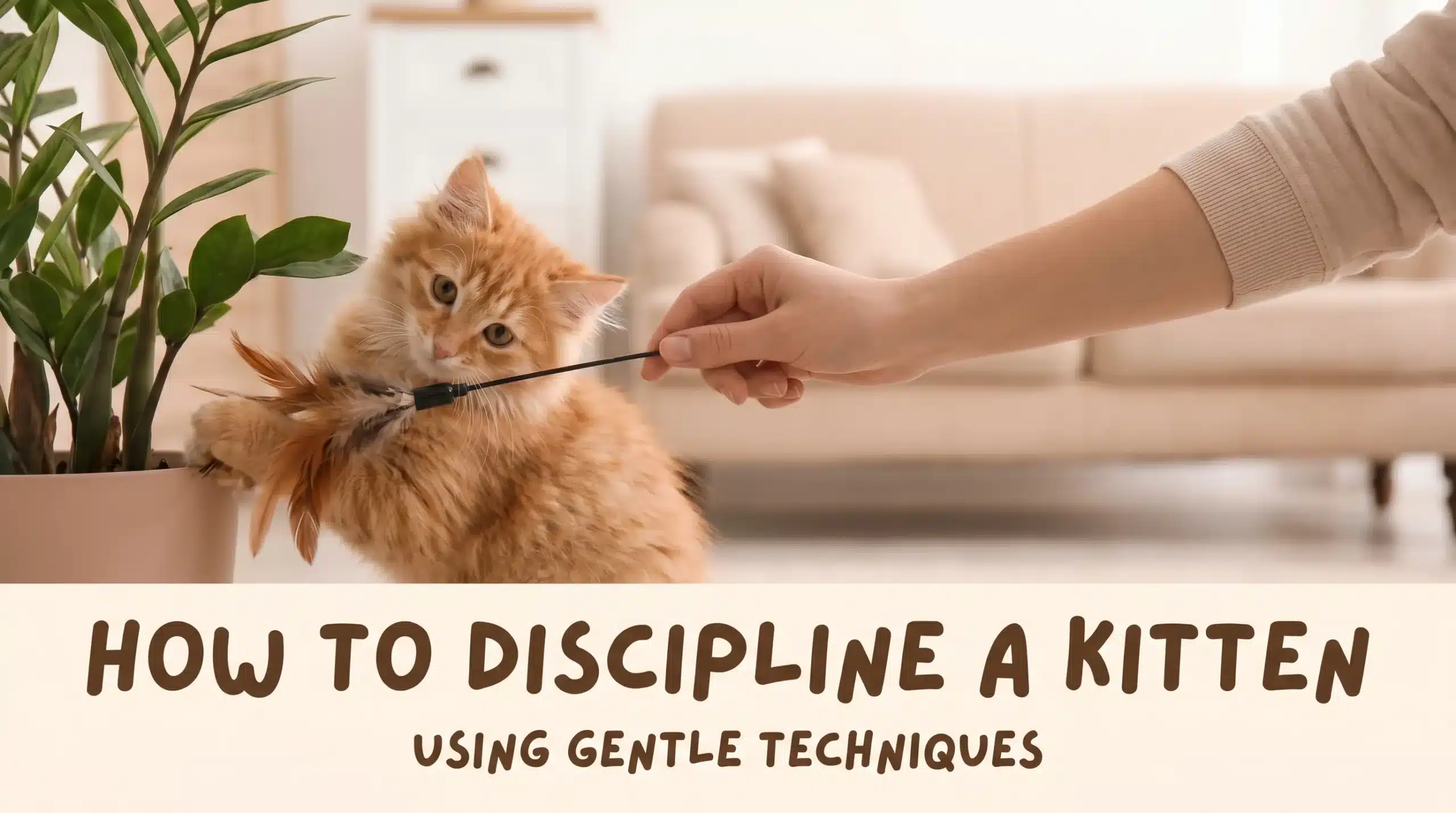
Gentle discipline is the best way to discipline a kitten and guide your kitten’s behavior. You never want to use physical punishment when you discipline a kitten. Kittens often act out because they’re learning about the world around them. You might notice your kitten misbehaves for several reasons:
-
They want attention.
-
They feel bored.
-
They need more stimulation.
-
They play rough because they haven’t learned boundaries.
-
They get active at night.
You can help your kitten grow into a well-behaved cat by using kindness and patience when you discipline a kitten. Understanding why disciplining a kitten gently matters will set you up for success.
Why Discipline a Kitten Gently
You want your kitten to grow into a confident, loving companion. The way you guide your kitten’s actions now shapes their future. Gentle discipline helps you build trust and teach your kitten what is acceptable behavior in your home.
Let’s look at why a gentle approach works best.
Understanding Kitten Behavior
Kittens go through several stages as they grow. Each stage brings new challenges and learning opportunities.
-
In the first weeks, kittens depend on their mother for care and comfort.
-
As their eyes open and they start to move, curiosity takes over.
-
From two to seven weeks, kittens learn social skills from their mother, littermates, and people.
-
During the juvenile period, play and exploration peak. This is when you see most mischief and playful antics.
Early socialization makes a big difference. If you handle your kitten daily during the first month, you help them become more outgoing and friendly. Kittens who miss out on this may feel shy or fearful later. Positive reinforcement, like treats or praise, encourages your kitten to repeat acceptable behavior. Playtime that mimics hunting also supports healthy development.
Physical punishment does not work.
-
Cats do not connect punishment with their actions.
-
If you use force, your kitten may become fearful or aggressive.
-
Punishment can damage the bond you share.
Instead, use gentle discipline. Withdraw attention when your kitten acts out. Offer consistent guidance and give them outlets for their energy. This approach helps your kitten learn what you expect.
The Role of Patience
Teaching a kitten takes time. You will not see changes overnight.
-
You need to repeat lessons and stay calm.
-
Consistency helps your kitten understand what is acceptable behavior.
-
If you rush or get frustrated, your kitten may feel stressed.
Animal behaviorists agree that patience is key. Your kitten can learn, but only if you give them time and support. Stick with gentle methods, and you will see progress. Over time, your kitten will grow into a well-mannered cat who trusts you.
Core Techniques for How to Discipline a Kitten
You want your kitten to learn good habits and feel safe at home. The best way to discipline kitten behavior is to use gentle, proven methods. Let’s break down how to discipline a kitten with techniques that work and keep your bond strong.
Positive Reinforcement
You can shape your kitten’s actions by rewarding behavior you like. Positive reinforcement means you give your kitten something she loves—like a treat, praise, or playtime—right after she does something good. This helps her connect the action with a happy outcome.
-
Give your kitten a treat when she comes out from hiding. This encourages her to explore and feel brave.
-
Pet your kitten gently and offer a treat when she lets you touch her. Over time, she will enjoy petting more.
-
Each time your kitten uses her scratching post, reward her with a treat or a favorite toy.
-
If your kitten stays calm or quiet, especially after being vocal or rough, give her a treat or extra affection.
-
Try teaching simple tricks. Use positive reinforcement and clicker training to make learning fun and boost her confidence.
When you start teaching a new behavior, use continuous rewards. Give a treat every time your kitten gets it right. As she learns, switch to rewarding her sometimes, not every time. Keep your training consistent. Over time, you can use more praise and fewer treats, but always let her know she did well.
Redirection and Alternatives
Kittens act on impulse. Sometimes, you need to guide their energy to the right place. Redirection means you stop unwanted behavior and show your kitten what she should do instead.
-
If your kitten jumps on the counter, remove food right after cooking so she has no reason to explore there.
-
Place a sturdy scratching post near the furniture she likes to scratch. When she uses the post, reward her right away.
-
Give her vertical spaces, like a window perch, so she can climb and watch the world safely.
-
Offer chew toys if she starts biting or chewing on things she shouldn’t.
-
Use calming pheromone diffusers if your kitten has litter box issues.
Distraction works well, too. If your kitten starts scratching the couch, toss a lightweight batting toy or start a play session with a wand toy. This shifts her focus and gives her a better outlet for her energy.
Set clear rules and stick to them.
Reward your kitten when she chooses the right thing, like using her scratching post or playing with her toys.
Clicker training can help you mark the exact moment she does what you want.
Ignoring Bad Behavior
Sometimes, the best way to discipline kitten behavior is to do nothing at all. If your kitten acts out to get your attention, even scolding can make things worse.
Any attention, even negative attention, could cause an attention-seeking cat to continue a behavior. By the same token, if you react negatively to your cat’s bad behavior, you’re still giving them attention. Some cats will learn that they get a reaction when they behave that way, and they’ll be more likely to do it again. To ensure that attention-seeking behavior doesn’t continue, it’s best to ignore any bad behavior altogether and reserve big reactions for good behavior. If your kitten meows loudly or paws at you for attention, turn away and stay quiet.
When she calms down or behaves well, give her lots of praise and maybe a treat. This teaches her that good behavior gets your attention, not bad behavior.
Removing from Situation
Sometimes, you need to step in and remove your kitten from a situation. This is not a punishment—it’s a gentle way to stop unwanted actions and keep everyone safe.
-
If your kitten gets too rough during play, pick her up and place her in a quiet room for a few minutes.
-
If she keeps jumping on the table, calmly move her to the floor and offer a toy or a perch as an alternative.
-
If she gets overstimulated, give her space to calm down.
Stay calm and gentle. Never yell or use force. You want your kitten to learn, not to fear you. Removing her from the situation gives her a chance to reset and try again. By using these core techniques, you can discipline kitten behavior in a way that builds trust and helps your kitten grow into a happy, well-mannered cat.
Remember, consistency and kindness are key when disciplining a cat. With patience and the right approach, you’ll see your kitten thrive.
Common Kitten Misbehaviors and Solutions
Kittens are curious, playful, and sometimes a little wild. You might see your kitten scratching, biting, or getting into places she shouldn’t. Don’t worry—these behaviors are normal. You can guide your kitten with gentle discipline and patience.
Let’s look at the most common misbehaviors and how you can handle them.
Scratching and Clawing
Almost every kitten scratches. Scratching helps kittens stretch, mark territory, and keep their claws healthy. You can’t stop this instinct, but you can direct it to the right places.
Here’s how you can manage scratching and clawing:
-
Place several scratching posts or pads around your home, especially where your kitten likes to hang out.
-
Choose scratching surfaces your kitten prefers—try sisal rope, cardboard, carpet, or wood.
-
Make sure each post is tall and sturdy enough for a full-body stretch.
-
Put scratching posts near furniture your kitten targets.
-
Encourage your kitten to use the posts with treats, praise, or a little catnip.
-
Reward your kitten every time she uses the scratching post.
-
If she scratches furniture, gently move her to the post and praise her when she uses it.
With these steps, you’re not punishing your kitten. You’re guiding her to better choices. This is the heart of discipline kitten behavior.
Biting and Rough Play
Kittens love to bite and wrestle. Sometimes, play gets too rough. You can teach your kitten to play gently with a few simple steps.
-
Use wand toys, feather teasers, or plush mice to satisfy your kitten’s hunting instincts.
-
Rotate toys often to keep things exciting.
-
Let your kitten pounce and bite toys, not your hands.
-
If your kitten bites you, freeze and say “ouch” in a calm voice.
-
Stop play right away. Stand up or walk away for a minute.
-
Make sure everyone in your home reacts the same way. Consistency helps your kitten learn.
-
Give your kitten plenty of playtime every day. This burns off energy and reduces rough play.
-
Avoid using your hands as toys. Only use them for gentle petting.
-
If your kitten gets too wild, give her a short time-out in a safe space.
This approach focuses on behavior modification, not punishment. You’re teaching your kitten what’s okay and what’s not.
Litter Box Issues
Litter box problems can be frustrating. Most kittens learn quickly, but accidents can happen. You can prevent and solve litter box issues with a few easy steps.
-
Provide one litter box per cat, plus one extra. This helps prevent stress and competition.
-
Scoop the litter box at least once a day. Change the litter often.
-
Use unscented, clumping litter. Most kittens prefer this type.
-
Place litter boxes in quiet, easy-to-reach spots.
-
Clean any accidents with an enzymatic cleaner to remove odors.
-
If your kitten avoids the box, try moving it to a more private location.
-
Block off areas where your kitten has had accidents until she’s using the box reliably.
|
Finding |
Detail |
|---|---|
|
Litter Box Per Cat |
One box per cat plus one extra is best, especially in multi-cat homes. |
|
Cleaning Frequency |
Scoop once or twice daily for a clean, inviting box. |
|
Recommendations |
Clean boxes often and use unscented, clumping litter. |
Jumping on Counters
Kittens love to climb and explore. Kitchen counters are tempting, but you can teach your kitten to stay off them.
-
Cover counters with aluminum foil or sticky tape. Most kittens dislike the feel.
-
Offer cat trees or shelves as climbing alternatives.
-
Move chairs or stools away from counters to block access.
-
Keep counters clean and free of food scraps.
-
Give your kitten a water fountain if she likes running water.
-
Don’t scold or chase your kitten. Ignore her when she jumps up, and reward her when she stays on the floor.
-
Play with your kitten in other areas to make them more fun.
Disciplining a cat for counter-jumping works best when you make other places more appealing.
Nighttime Activity
Many kittens get the “zoomies” at night. You can help your kitten sleep when you do by adjusting her routine.
|
Strategy |
Description |
|---|---|
|
Evening Play |
Play with your kitten in the evening to tire her out. Use wand toys or laser pointers. |
|
Adjust Feeding Schedule |
Feed your kitten before bedtime. A full belly helps her sleep. |
|
Daytime Stimulation |
Keep your kitten busy during the day with toys and puzzles. |
|
Manage Your Space |
If needed, keep your kitten out of your bedroom at night. |
|
Avoid Rewarding Nighttime Play |
Don’t get up to play or feed your kitten if she wakes you. Wait until morning. |
Attention-Seeking
Some kittens demand attention all day. You can set healthy boundaries and encourage good behavior.
-
Reward your kitten when she’s calm and quiet. Use treats, praise, or gentle petting.
-
Ignore meowing, pawing, or other attention-seeking actions.
-
Try clicker training to mark and reward good behavior.
-
Play with your kitten every day to give her the exercise and stimulation she needs.
-
Set clear limits. If your kitten bites or claws for attention, walk away right away.
-
Create a cozy area with toys and a bed where your kitten can relax.
-
Use positive reinforcement to shape your kitten’s actions.
Correcting unwanted behaviors takes time, but gentle discipline and consistency will help your kitten grow into a happy, well-mannered cat.
Do’s and Don’ts of Disciplining a Cat
When you want to guide your kitten’s behavior, it helps to know what works and what to avoid. Using the right approach builds trust and helps your kitten feel safe.
Let’s break down the do’s and don’ts so you can use humane ways to discipline and raise a happy, well-adjusted cat.
Effective Do’s for Discipline
You can set your kitten up for success by focusing on positive actions. Here’s what you should do:
-
Understand your kitten’s needs. When you know why your kitten acts a certain way, you can redirect her energy in a healthy direction.
-
Use positive reinforcement. Give treats, praise, or playtime when your kitten does something you like. This encourages her to repeat good behavior.
-
Stop play if biting or roughness happens. This teaches your kitten about boundaries without scaring her.
-
Reward alternative behaviors. If your kitten chooses her scratching post instead of the couch, give her a treat or extra affection.
-
Stay consistent. Use the same rules and rewards every day so your kitten knows what to expect.
-
Be patient and gentle. Kittens learn best when you show kindness and give them time.
Common Don’ts to Avoid
Some actions can harm your relationship with your kitten or make behavior problems worse. Here’s what you should avoid:
|
Common Don’ts |
Explanation |
|---|---|
|
Don’t use a spray bottle |
Spraying water can make your kitten fearful and does not teach her what she did wrong. |
|
Don’t compare your cat to your dog |
Cats learn differently from dogs. Dog training methods do not work for cats. |
|
Don’t physically discipline your cat |
Physical punishment can cause fear, aggression, and long-term emotional issues. |
|
Don’t yell to make a point |
Yelling can scare your kitten and increase anxiety. |
|
Don’t rub your cat’s nose in an accident |
This does not teach your kitten anything and can make her more stressed. |
|
Don’t allow play that isn’t okay |
Letting rough play happen can confuse your kitten about what is allowed, especially with children. |
Physical punishment never helps. Kittens do not connect punishment with their actions. If you use force, you can damage your bond and cause fear or aggression. Always choose gentle methods when you think about how to discipline a cat. By following these do’s and don’ts, you create a loving environment where your kitten can thrive.
Gentle, positive discipline shapes your kitten into a loving companion. When you stay patient and consistent, you help your kitten learn what you expect. Building trust makes your bond stronger and helps your kitten feel safe.
-
Trust grows with gentle handling and routines, making your kitten more secure and affectionate.
-
Patience and steady guidance help your kitten learn good habits.
-
Avoid punishment, as it can cause fear and confusion.
You’re not alone on this journey. With kindness and understanding, you’ll raise a happy, confident cat. 🐾
FAQ
How long does it take for a kitten to learn good behavior?
Most kittens start to show improvement within a few weeks. You need to stay consistent and patient. Every kitten learns at her own pace, so don’t worry if progress feels slow.
Can I use treats every time I reward my kitten?
You can use treats often at first. As your kitten learns, switch to praise or playtime. This keeps her motivated without overfeeding. Try mixing up rewards to keep things interesting.
What should I do if my kitten keeps biting me?
Stop play right away. Say “ouch” in a calm voice. Walk away for a minute. Offer toys instead of your hands. Your kitten will learn that gentle play keeps the fun going.
Is it okay to use a spray bottle for discipline?
No, you shouldn’t use a spray bottle. It can make your kitten fearful and damage your bond. Stick with gentle methods like redirection and positive reinforcement.
How can I help my kitten adjust to new rules?
Set clear boundaries. Use the same rules every day. Reward good choices. Stay calm and patient. Your kitten will feel safe and learn faster when you keep routines steady.
\

In her previous life, Lisa traveled extensively, both for work and leisure. After the pandemic struck, Lisa locked up her luggage and adopted a cat ever since.
Lisa is now an avid cat lover, she devotes most of her free time serving as butler to her adorable feline at home. When she is not with her cat, she can be seen using her phone sourcing for the latest cat supplies online.

