Nothing feels more frustrating than finding little puddles around your home. You might wonder if you’re doing something wrong or if your kitten will ever learn.
The good news?
You can stop kitten peeing with some simple changes. Most kittens just need a little guidance and consistency.
Stay patient—your efforts will pay off soon.
Ready to figure out why your kitten chooses the floor over the litter box?
Let’s get started.
Key Takeaways
-
Visit the vet to check for health issues if your kitten starts peeing outside the litter box.
-
Set up a clean and comfortable litter box in a quiet area to encourage your kitten to use it.
-
Reduce stress by keeping your kitten’s environment calm and predictable.
-
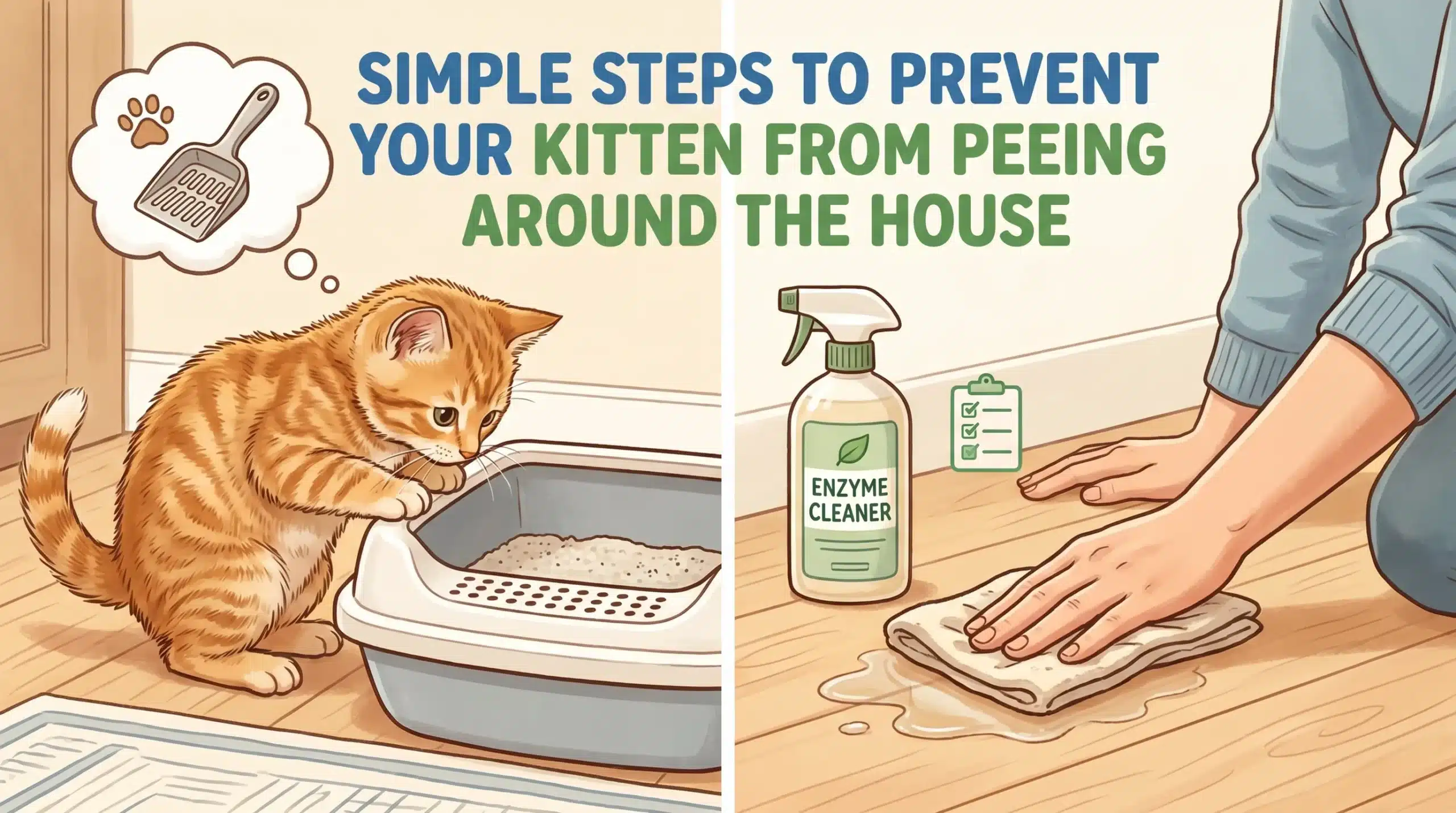
Use enzyme cleaners to thoroughly clean any accidents and remove odors that may attract your kitten back to the same spot.
-
Reward your kitten with praise or treats when they use the litter box to reinforce good behavior.
Why Kittens Pee Outside the Litter Box
You want to stop kitten peeing, but first, you need to know why it happens. Kittens rarely pee outside the litter box just to annoy you. Most of the time, there’s a reason behind it. Let’s break down the most common causes so you can tackle the problem at its source.
Medical Causes
Sometimes, your kitten’s bathroom habits signal a health issue. If your kitten suddenly starts peeing outside the box, a trip to the vet should be your first step. Here are some medical conditions that can cause this behavior:
|
Medical Condition |
Description |
|---|---|
|
Urinary tract infection (UTI) |
Bacteria in the urine cause inflammation, straining, frequent urination, or blood in urine. |
|
Crystalluria (urinary crystals) |
Crystals form in urine, causing irritation and sometimes leading to bladder stones or UTIs. |
|
Cystic calculi (bladder stones) |
Stones irritate the bladder wall, causing urgency and discomfort. |
|
Hyperthyroidism |
Overactive thyroid leads to increased thirst, urination, weight loss, and vomiting. |
|
Degenerative joint disease |
Painful joints make it hard for kittens to climb into the litter box. |
|
Kidney disease |
Increased thirst and urination, appetite loss, vomiting, and weight loss are common signs. |
|
Feline idiopathic cystitis |
Stress or changes in the environment can trigger urination outside the box, sometimes with blood. |
Tip: Always rule out medical issues before trying other solutions. Early treatment can help your kitten feel better and get back to using the litter box.
Behavioral and Environmental Triggers
If your vet gives the all-clear, look at your kitten’s environment and daily routine. Many kittens pee outside the box because of stress or litter box problems. Here are the most common triggers:
-
Dirty litter box or a type of litter your kitten dislikes
-
Litter box is too small or there aren’t enough boxes for multiple cats
-
Box placed in a noisy or busy area
-
Stress from changes at home, like new pets or moving furniture
-
Territorial marking, especially in multi-cat households
-
Negative experiences, such as pain during urination, causing litter box aversion
In homes with more than one cat, kittens may feel threatened or blocked from using the box. Disruptions in routine or competition for resources can also lead to accidents.
How to Stop Kitten Peeing
Now that you know why kittens might pee outside the litter box, let’s talk about what you can do to stop kitten peeing for good. You don’t need fancy tools or complicated routines—just a few simple steps and a little patience. Here’s how you can help your kitten develop healthy bathroom habits.
Rule Out Medical Issues
Before you try anything else, make sure your kitten isn’t dealing with a health problem. Many owners skip this step, but it’s one of the most important ways to stop kitten peeing. If your kitten suddenly starts having accidents, schedule a vet visit right away.
-
Watch for signs like straining to urinate, crying out, frequent trips to the box, or blood-tinged urine.
-
Medical issues that can cause these problems include urinary tract infections, bladder stones, metabolic diseases (like diabetes or kidney disease), and feline lower urinary tract disease.
-
Your vet may recommend tests such as urinalysis, urine culture, blood work, or imaging to get to the root of the problem.
|
Diagnostic Test |
Purpose |
|---|---|
|
Urinalysis via cystocentesis |
Checks urine for infection, crystals, or inflammation |
|
Urine culture and sensitivity |
Identifies bacterial infections |
|
CBC and chemistry panel |
Assesses overall health and organ function |
|
Imaging (X-rays, ultrasound) |
Looks for stones or structural issues |
|
Endoscopy |
Examines the urinary tract if needed |
Tip: Never assume your kitten’s accidents are just behavioral. A quick vet check can save you time and help your kitten feel better fast.
Litter Box Setup
A good litter box setup can make all the difference when you want to stop kitten peeing. Kittens are naturally clean and picky about their bathroom spots. Here’s how to create the perfect setup:
-
Keep it clean: Scoop the litter box every day. Some kittens prefer it even cleaner, so check it often. Once a week, empty all the litter and wash the box with mild soap and hot water. Replace the box every year to keep things fresh.
-
Choose the right location: Place the box in a quiet, low-traffic area. Corners work well because they help your kitten feel secure. Avoid noisy spots or places with lots of activity.
-
Provide enough boxes: The rule of thumb is one box per cat, plus one extra. This helps reduce stress and prevents territorial issues, especially in multi-cat homes.
-
Pick the right litter: Kittens have preferences, so you might need to try a few types. Clumping clay is easy to clean, while natural litters are gentle and eco-friendly. Some kittens like soft textures, so pay attention to what your kitten seems to enjoy.
|
Type of Litter |
Description |
|---|---|
|
Clumping Clay |
Forms solid clumps for easy cleaning; made from bentonite clay. |
|
Non-Clumping Clay |
Absorbs urine without clumping; often cheaper and familiar to many cats. |
|
Natural Litters |
Made from biodegradable materials like wood fibers and wheat; offers clumping and odor control. |
|
Pine |
Made from lumber scraps; controls odor naturally and is gentle on kittens’ paws. |
|
Lightweight Litter |
50% lighter than typical litters; easier to handle but may not be suitable for very young kittens. |
|
PrettyLitter |
Soft texture, low maintenance, advanced odor control, and color-changing crystals for health monitoring. |
-
Avoid common mistakes: Don’t move the box around or change litter types too often. Consistency helps your kitten feel confident and secure.
Reduce Stress
Stress is a big reason kittens pee outside the box. Even small changes at home can make your kitten anxious. Here’s how you can create a calm environment:
-
Use pheromone sprays or diffusers near the litter box to help your kitten relax.
-
Place a soft mat or rug by the box for extra comfort.
-
Keep the litter box in a quiet spot, away from loud noises and busy areas.
-
Rotate toys and play with your kitten every day to keep them engaged and happy.
-
If you have visitors or are moving furniture, try to keep your kitten’s routine as steady as possible.
Clean Soiled Areas
If your kitten has already peed outside the box, cleaning up properly is crucial. Regular cleaners often leave behind odors that encourage repeat accidents. Here’s what works best:
-
Use enzyme or probiotic cleaners. These break down the proteins in urine and remove odors at the source.
-
Enzyme cleaners work quickly, while probiotic cleaners keep working over time by creating a healthy microbial layer.
-
For stubborn spots, let the cleaner sit for at least 5-10 minutes before blotting.
-
Avoid ammonia-based products, as they can smell like urine to your kitten.
-
Try citrus-based deterrents in problem areas—most kittens dislike the smell and will avoid those spots.
|
Feature |
Enzyme Cleaners |
Probiotic Cleaners |
|---|---|---|
|
Odor Elimination |
Breaks down odors fast |
Works continuously |
|
Application Time |
5-10 minutes |
Ongoing |
|
Residual Effect |
Limited |
Long-lasting |
Cleaning thoroughly helps stop kitten peeing by removing all traces of scent and discouraging repeat accidents.
Use Positive Reinforcement
Kittens learn best with gentle encouragement. Positive reinforcement helps your kitten build good habits and feel confident using the litter box.
-
Praise your kitten with a happy voice when they use the box.
-
Offer a small treat or gentle petting right after they finish.
-
If your kitten seems unsure, gently place them in the box after meals or naps, then praise them when they use it.
-
Avoid punishment—scolding or startling your kitten can make the problem worse.
Patience and consistency matter most. Stick with these steps, and you’ll see progress. Most kittens respond quickly when you address their needs and create a positive, stress-free environment. If you still struggle to stop kitten peeing after trying these tips, don’t hesitate to reach out to your vet or a cat behaviorist for extra help.
When to Seek Professional Help
You’ve tried everything, but your kitten still pees outside the box. Sometimes, you need extra support to solve stubborn bathroom issues. Knowing when to reach out can save you stress and help your kitten feel better fast.
Signs You Need Extra Support
Some signs tell you it’s time to call in a professional. You might notice your kitten acting strange or showing symptoms that go beyond simple accidents. Watch for these behaviors:
-
Urinating outside the litter box
-
Bloody urine or urine with a strong odor
-
Spending more time in the litter box than usual
-
Making frequent trips to the box
-
Straining to urinate with little or no urine coming out
-
Licking below the base of the tail
-
Crying or howling during urination attempts
-
Excessive thirst
-
Vomiting
-
Loss of appetite
-
Hiding
-
Increased aggression
-
Discomfort when you pick up or touch your kitten’s belly
FAQ
How often should you clean your kitten’s litter box?
You should scoop the litter box at least once a day. Replace all the litter and wash the box with mild soap every week. Clean boxes help your kitten feel comfortable and prevent accidents.
What if your kitten keeps peeing in the same spot?
Try an enzyme cleaner to remove all traces of odor. Place a litter box near the problem area. You can also use a citrus spray as a deterrent—most kittens dislike the smell.
Can stress cause your kitten to pee outside the litter box?
Yes! Changes at home, new pets, or loud noises can stress your kitten. Try to keep routines steady. Use pheromone diffusers and give your kitten extra playtime to help them relax.
Should you punish your kitten for accidents?
No, never punish your kitten. Scolding or startling them can make things worse. Instead, reward good behavior with treats or praise. Positive reinforcement works best for building healthy habits.

In her previous life, Lisa traveled extensively, both for work and leisure. After the pandemic struck, Lisa locked up her luggage and adopted a cat ever since.
Lisa is now an avid cat lover, she devotes most of her free time serving as butler to her adorable feline at home. When she is not with her cat, she can be seen using her phone sourcing for the latest cat supplies online.