
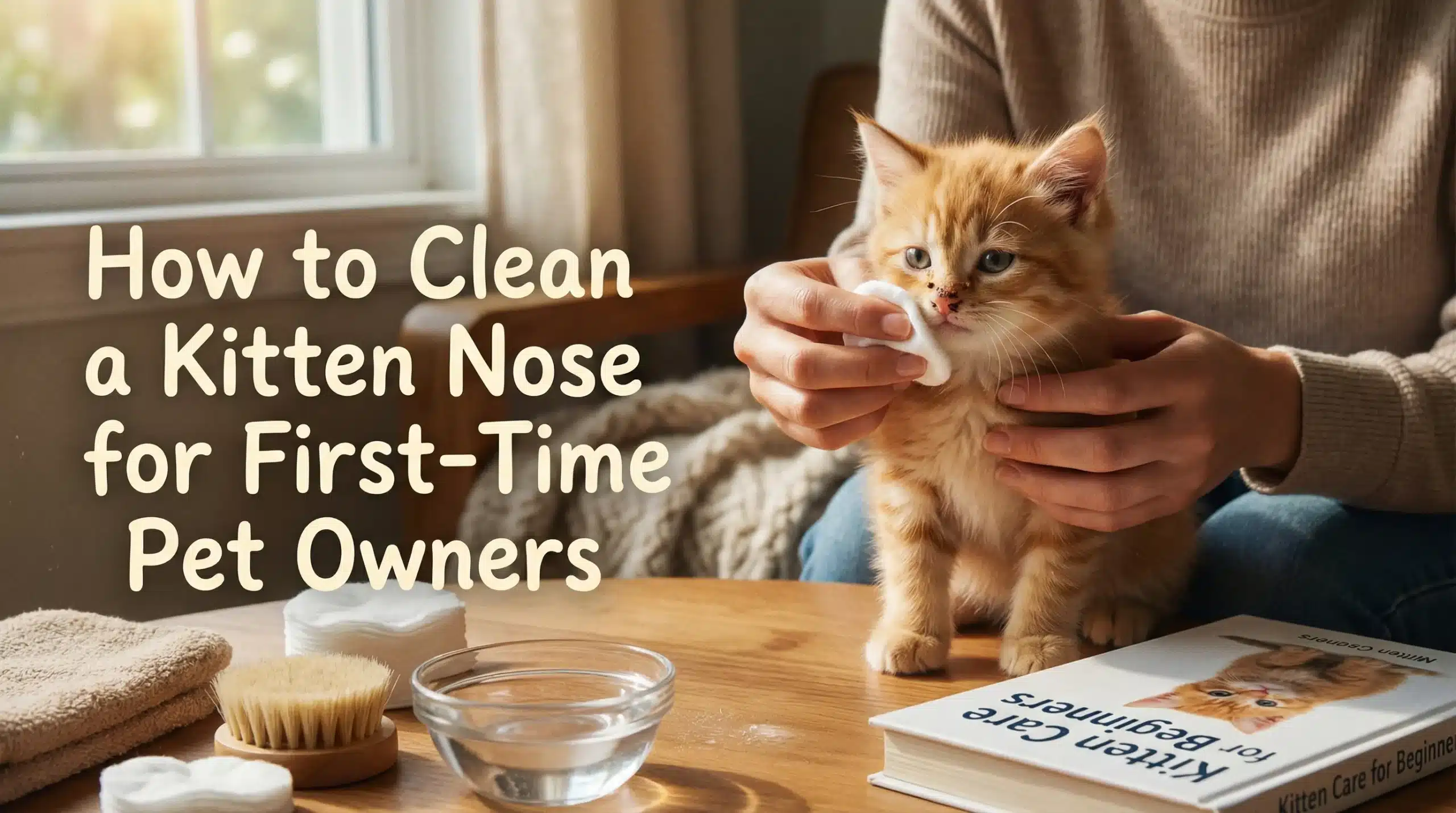
You might wonder when to clean your kitten’s nose. If you see crusts or mild discharge on the outside, gentle cleaning is safe and easy. Many new owners worry about normal crustiness, sometimes mistaking it for blood or a health issue. Here are common mistakes first-time owners make:
-
Using rough materials instead of a warm, wet cloth
-
Not realizing that oxidized discharge is usually harmless
-
Overreacting to normal crusts
You only need to clean the outside of the nose. Never clean inside unless your vet tells you to.
Ready to learn how to clean kitten nose? Let’s walk through each step together.
Key Takeaways
-
Gently clean your kitten’s nose with a warm, wet cloth to remove crusts and discharge. This helps keep them comfortable and healthy.
-
Use safe supplies like hypoallergenic wipes and saline solution. Avoid harsh chemicals and essential oils that can irritate your kitten’s skin.
-
Monitor your kitten’s nose for unusual discharge. If symptoms persist or worsen, consult your vet for professional advice.
How to Clean Kitten Nose
You want your kitten to feel comfortable and healthy at home. Learning how to clean kitten nose is a simple way to help your cat at home and prevent bigger problems. Let’s break down why this matters and how you can do it safely.
Why Cleaning Matters for Kittens
Kittens often get a runny nose, especially if they are fighting off a cold or virus. If you leave discharge or crusts on their nose, it can cause more than just discomfort. Here’s why regular cleaning is important:
-
Sick cats can spread viruses through droplets when they sneeze or cough.
-
Humans can catch some viruses from these droplets if they touch their face after cleaning a kitten’s runny nose.
-
Discharge from an infected cat’s nose may carry viruses that can affect other cats at home.
-
Kittens with oral ulcers may stop grooming themselves, which can lead to more health issues.
-
Regular cleaning helps prevent the spread of calicivirus, which often causes oral ulcers and makes grooming painful.
-
Keeping the nostrils clear by gently wiping away crusted discharge helps your kitten breathe better and stay comfortable.
Supplies to Help Your Cat at Home
You don’t need fancy tools to learn how to clean kitten nose. Most supplies are easy to find at home or at a pet store. Here’s what you should have ready:
-
Warm water
-
Soft tissues or cotton balls
-
Pet-friendly wipes (like Hepper’s Wash Wipes, which are hypoallergenic and safe for sensitive areas)
-
Q-tips for stubborn crusts (use with care)
-
A small amount of mineral oil or coconut oil for dried mucus (ask your vet first)
-
Saline solution for gentle cleaning, especially if your kitten has a runny nose
Tip: Always choose hypoallergenic and fragrance-free products. Avoid anything with essential oils, perfumes, chlorine bleach, ammonia, or phenols. These can irritate your kitten’s skin and cause serious health problems.
Here’s a quick look at supplies to use and avoid:
|
Use These |
Avoid These |
|---|---|
|
Warm water |
Essential oils |
|
Hypoallergenic pet wipes |
Perfumes |
|
Soft tissues/cotton balls |
Harsh chemicals (bleach, ammonia) |
|
Saline solution |
Phenols |
Step-by-Step Cleaning Process
Now, let’s walk through how to clean kitten nose safely and gently:
-
Prepare Your Supplies: Gather everything you need and wash your hands before you start.
-
Keep Your Kitten Calm: Place your kitten on a flat surface. Hold them gently by the nape of the neck. Speak softly to help them relax.
-
Wipe the Nose: Soak a tissue, cotton ball, or pet wipe in warm water or saline solution. Gently wipe the outside of your kitten’s nose. Don’t rub hard—just enough to remove crusts or mucus.
-
Tackle Stubborn Crusts: For dried mucus, dab a little mineral oil or coconut oil on the spot. Wait a minute, then wipe again with a damp tissue.
-
Use Q-tips Carefully: If you need to, use a Q-tip for small, stubborn spots. Be gentle and never push into the nostril.
-
Finish Up: Give your kitten a treat or some gentle petting to make the experience positive.
-
Wash Your Hands: Always wash your hands after cleaning to avoid spreading germs.
Dealing with Runny Nose and Crusts
A runny nose is common in kittens, especially if they have a cold or are adjusting to a new home. Here’s how you can help your cat at home when you notice a runny nose:
-
Use a humidifier in the room to help break up congestion.
-
Clean your kitten’s nose and eyes regularly with saline solution or clear water.
-
Always wash your hands before and after cleaning to prevent spreading infection.
-
Watch for changes in the color or amount of discharge. If the runny nose gets worse or your kitten seems sick, contact your vet.
-
If your kitten has a runny nose and oral ulcers, they may stop grooming. You’ll need to clean their nose more often to keep them comfortable.
Should You Clean Inside the Nose?
You might wonder if you should clean inside your kitten’s nose. The answer is almost always no. Cleaning inside the nose can cause irritation or even injury. Here’s what you should do:
-
Only clean the outside of the nose.
-
If you notice dirt or discharge that won’t come off, monitor your kitten for other symptoms like sneezing or a runny nose.
-
If the dirty appearance or runny nose continues, or if your kitten seems unwell, consult your vet. They can safely clean inside the nose if needed.
Here’s a table of possible reactions if you use the wrong supplies:
|
Symptom |
Description |
|---|---|
|
Tearing of the eyes |
Excessive tearing can mean irritation from cleaning products. |
|
Sneezing |
Your kitten may sneeze if they inhale chemical fumes. |
|
Throat irritation |
Some cleaning agents can irritate the throat. |
|
Skin irritation |
Bumps, hair loss, or itchy skin may develop from harsh chemicals. |
|
Overgrooming |
Cats may lick irritated areas, causing fur loss. |
|
Pulling out tufts of fur |
This shows discomfort and irritation from cleaning products. |
If your kitten has a runny nose, keep an eye on their behavior and symptoms. Cleaning the outside of the nose is usually enough to keep them healthy and happy at home.

Signs You Need a Vet
You should know when to call the vet. If your kitten has severe trauma, trouble breathing, or eats something toxic, seek help right away. If nasal discharge in cats persists after cleaning, or if your kitten seems lethargic, unresponsive, or has seizures, call your vet. Early action helps prevent minor issues from becoming emergencies.
If symptoms like nasal discharge, runny nose, or loss of appetite continue, don’t wait—get professional advice.

In her previous life, Lisa traveled extensively, both for work and leisure. After the pandemic struck, Lisa locked up her luggage and adopted a cat ever since.
Lisa is now an avid cat lover, she devotes most of her free time serving as butler to her adorable feline at home. When she is not with her cat, she can be seen using her phone sourcing for the latest cat supplies online.