
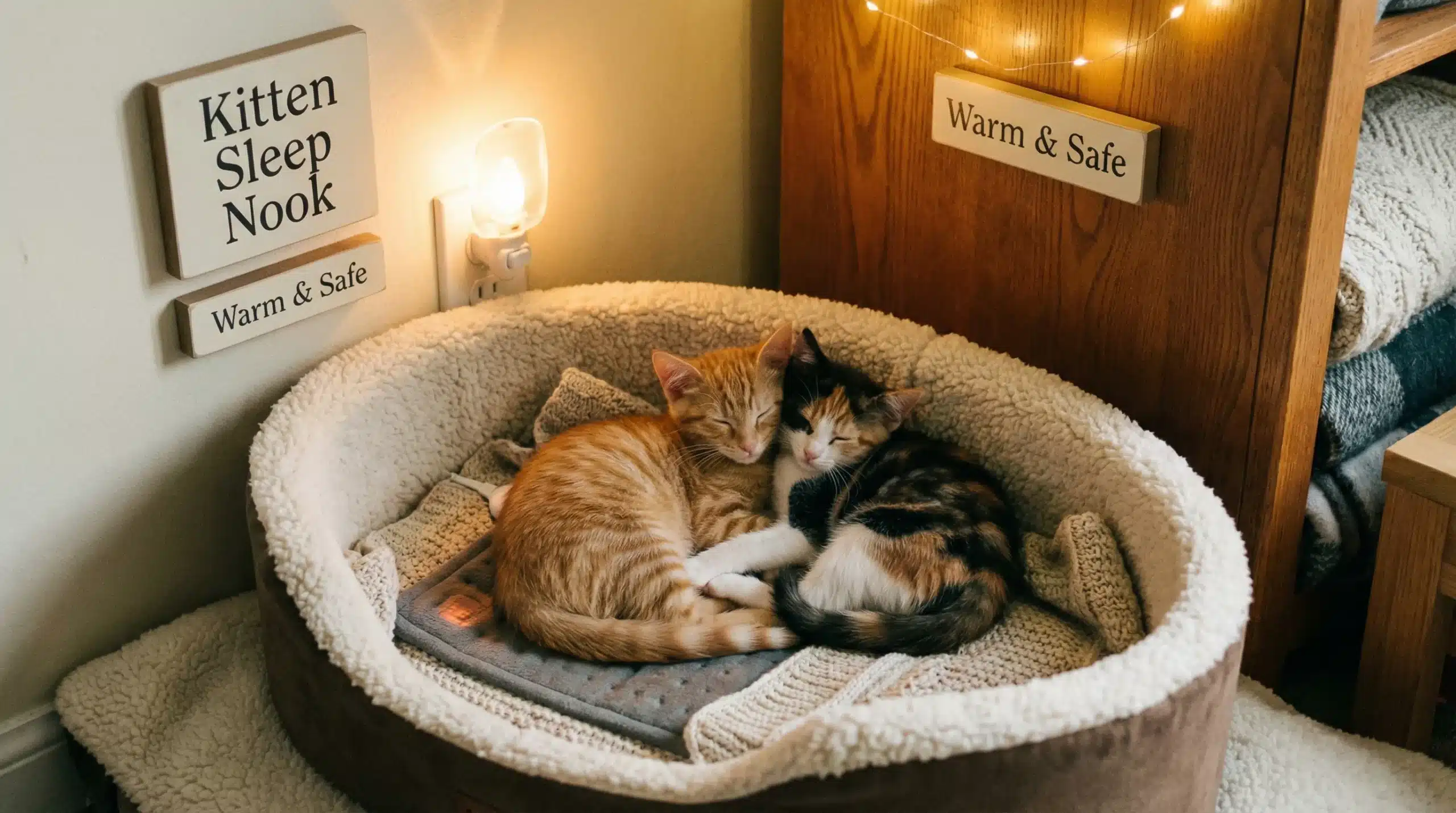
You can keep your kitten cozy and safe by creating a warm sleeping space each night. Place your kitten in a draft-free area and use materials like straw in a sturdy box or a lined plastic tote for insulation. Learning how to keep kitten warm at night helps protect their health and comfort.
Key Takeaways
-
Choose a quiet, draft-free location for your kitten’s sleeping area to keep them warm and safe.
-
Use safe heating methods like warm water bottles or heating discs, wrapped in towels, to provide extra warmth for young kittens.
-
Pick bedding, such as straw or self-warming beds, to help retain heat and keep your kitten comfortable.
Why kittens need warmth
Dangers of cold for kittens
You need to understand why kittens face greater risks from cold than adult cats. Young kittens cannot regulate their body temperature. Their bodies lack enough fat for insulation, and their hypothalamus is not mature enough to control warmth. They cannot shiver to generate heat or pant to cool down. Their small size means they lose heat quickly.
-
Kittens, senior cats, and those with health problems are more vulnerable to cold.
-
Even temperatures as low as 50°F can cause problems for kittens.
-
Thin kittens tolerate cold poorly.
When exposed to cold, kittens may develop hypothermia. You might notice shivering, weakness, cold skin, pale gums, stiff muscles, or difficulty breathing. Severe hypothermia can cause loss of consciousness or abnormal heart rhythms.
Cold conditions also slow metabolism and reduce appetite, making kittens lethargic and less responsive.
Benefits of a warm sleeping space
A warm sleeping space supports your kitten’s health and development. Kittens under four weeks old cannot regulate their body temperature. Keeping their nest between 75°F and 79°F helps digestion, circulation, and immune function.
Warmth prevents illness and supports growth.
-
A warm environment helps kittens fight infections.
-
Proper warmth improves digestion and keeps kittens active.
-
Growth rates increase when kittens stay warm.
|
Age (weeks) |
Developmental Changes |
Benefits of Warmth |
|---|---|---|
|
2 |
First steps, wobbly |
Stability and growth |
|
3 |
Walking, exploring |
Curiosity and exploration |
|
4 |
Confident play |
Responsiveness and well-being |
Learning how to keep kitten warm at night ensures your kitten stays healthy and reaches important milestones.
How to keep kitten warm at night: step-by-step
Creating a warm sleeping space for your kitten is essential for their health and comfort. You can follow these steps to ensure your kitten stays cozy and safe through the night.
Choose a draft-free location
Start by selecting a quiet, draft-free room for your kitten’s sleeping area. This helps prevent cold air from lowering your kitten’s body temperature. You can use a spare bathroom or laundry room, as these spaces are often easy to clean and kitten-proof. Remove hazards such as exposed wires, small objects, or toxic plants. Always check for drafts by getting down to your kitten’s level near windows and doors.
If you feel a breeze, your kitten will feel it too. Use draft stoppers or move the sleeping area away from cold spots to keep your kitten warm.
-
Pick a quiet, draft-free room.
-
Ensure the space is easy to clean and free of hazards.
-
Check for cold air near windows and doors.
-
Use draft stoppers or relocate the sleeping area if needed.
Choose safe heating methods
Kittens under four weeks old need extra help to stay warm. They cannot generate their own body heat, so you must provide an external heat source. Safe options include warm water bottles, heating discs, or microwavable rice socks. Always wrap these in a soft towel or microfleece to prevent burns. Avoid using electric heating pads unless you can control the temperature and add several layers of fabric between the pad and your kitten. Gradually warm your kitten over one to four hours to avoid sudden temperature changes.
-
Use warm water bottles, heating discs, or rice socks.
-
Wrap heat sources in towels or microfleece.
-
Avoid direct contact between heating devices and your kitten.
-
Never use electric heating pads without proper safety measures.
Pick the right bedding
The bedding you choose plays a big role in how to keep kitten warm at night. Straw is an excellent insulator because it traps air and stays dry, making it ideal for outdoor shelters. For indoor kittens, self-warming cat beds with an insulating layer work well. These beds capture and reflect your kitten’s body heat, helping them stay warm overnight.
Donut beds, covered beds, and soft fleece blankets also provide comfort and warmth. Avoid materials like hay or regular blankets that can retain moisture and become cold.
-
Straw: Best for insulation and moisture resistance, especially outdoors.
-
Self-warming beds: Reflect and retain body heat.
-
Donut or cave-style beds: Offer warmth and a sense of security.
-
Fleece blankets: Soft, washable, and comfortable.
Set up the sleeping area
Arrange your kitten’s sleeping area to maximize warmth and safety. Place the bed or box in the draft-free location you chose. Add the selected bedding and position the heat source beneath or beside the bedding, making sure your kitten can move away from the heat if they get too warm.
For outdoor kittens, use a sturdy shelter with straw for insulation and a plastic flap to keep out rain or snow.
For indoor kittens, provide a cozy bed and consider placing multiple beds around your home for flexibility.
-
Place the bed in a draft-free spot.
-
Add insulating bedding and a safe heat source.
-
Ensure your kitten can move to a cooler area if needed.
-
For outdoor shelters, use straw and weatherproof features.
Temperature guidelines for kittens
Keeping the right temperature is a key part of how to keep kitten warm at night. The ideal room temperature depends on your kitten’s age. Use the table below to guide you:
|
Kitten Age |
Ideal Room Temperature |
|---|---|
|
Newborn to 7 days |
Around 90°F |
|
8 to 30 days |
80°F to 85°F |
|
4 weeks |
75°F |
|
6 weeks |
70°F |
You should also monitor your kitten’s body temperature:
-
Newborn kittens: 95-99°F
-
2-3 weeks old: 97-100°F
-
4 weeks old: 99-101°F
-
Older than 4 weeks: 100.5-102.5°F
Following these steps will help you master keeping your kitten warm at night, supporting their healthy development. Remember to adapt your approach as your kitten grows, as their needs change with age.

Monitor and maintain warmth
Temperature guidelines by age
You need to follow specific temperature guidelines for kittens at different stages. The table below shows the recommended temperatures for each age group. Keeping the sleeping area within these ranges helps prevent health issues and supports growth.
|
Age (weeks) |
Temperature Requirement (°F) |
Notes |
|---|---|---|
|
1 |
85 |
Kittens cannot regulate body temperature; a heat source is critical. |
|
2 |
80 |
Kittens still cannot regulate body temperature; a heat source is necessary. |
|
3 |
75 |
Kittens are more active but still require a heat source. |
|
4 |
70-75 |
Kittens may use the heat source less frequently as they grow. |
How to check and adjust warmth
You should check your kitten’s sleeping area every few hours. Use a thermometer or a kitten GPS tracker with temperature sensors to monitor the environment. These devices alert you to dangers like overheating or hypothermia. Place a heating pad set to about 98°F under a box with a towel, allowing your kitten to move away if needed.
If you notice signs of a cold kitten—shivering, lethargy, cold ears, or paws—gently warm the kitten using a heating pad wrapped in towels. Offer fluids only if the kitten is alert. Never feed a cold kitten.
-
Use temperature sensors or thermometers.
-
Allow kittens to move to cooler spots.
-
Warm cold kittens gently and consult a veterinarian.
Safety tips to prevent overheating
You must prevent overheating by watching for signs like excessive panting, drooling, lethargy, or seeking cool areas. Provide fresh water and let your kitten choose between heated and unheated spaces. Always read heating device instructions, inspect cords, and avoid extension cords. Place heating pads on flat surfaces and monitor your kitten’s behavior. Clean devices regularly and use timers to regulate heating cycles.

In her previous life, Lisa traveled extensively, both for work and leisure. After the pandemic struck, Lisa locked up her luggage and adopted a cat ever since.
Lisa is now an avid cat lover, she devotes most of her free time serving as butler to her adorable feline at home. When she is not with her cat, she can be seen using her phone sourcing for the latest cat supplies online.