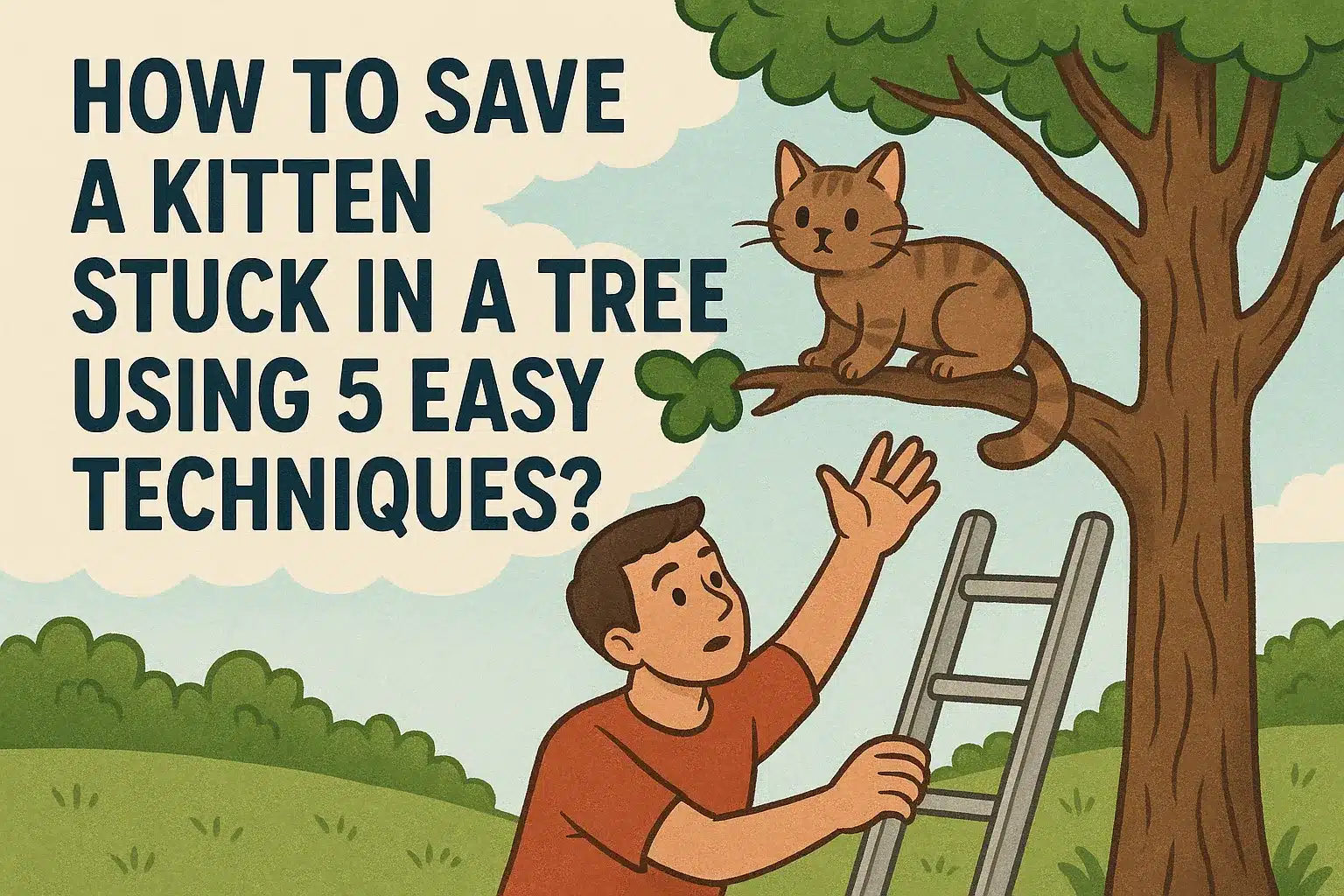
A kitten trapped in a tree faces significant dangers. Dehydration, which can develop rapidly, may cause severe health issues, including kidney damage. Injuries can be caused by falls or stress. Because kittens instinctively climb upward, they often lack the ability to descend safely. Therefore, prompt action is essential for the kitten’s safety. It’s important to remain calm and avoid further frightening the animal.
Knowing how to rescue a kitten safely from a tree can be a life-saving skill.
Assess the Situation Before You Act
Observe the Kitten’s Behavior and Location
Before taking action, examine the kitten to understand its condition and surroundings. Look for signs of distress, such as loud meowing or frantic movements. If the kitten appears calm, it may feel safe but unsure how to climb down. However, immediate danger requires urgent attention. Watch for signs like dehydration, which include skin that doesn’t return to place when pinched.
Lethargy or disorientation after 12 hours also indicates a problem. Injuries, such as broken bones or infected wounds, demand veterinary care.
Next, assess the kitten’s location in the tree. Note how high it is and whether the branches provide stable footing. Check for obstacles like power lines or weak limbs that could complicate the rescue. This step helps you plan the safest approach while minimizing risks to both you and the kitten.
Ensure Your Safety and Gather Necessary Tools
Your safety is just as important as the kitten’s. Avoid rushing into the rescue without preparation. Wear sturdy shoes with good grip and consider gloves to protect your hands. If the tree is tall, use a sturdy ladder and have someone hold it steady. A helper can also assist by keeping the kitten calm or handing you tools.
Gather essential items before starting.
A long plank, blanket, or rope can create a safe path for the kitten. Food or treats may help lure it down. For higher rescues, professional tools like ropes or a secure net bag can make the process safer. Planning ahead ensures a smoother rescue and reduces the risk of injury.
Always prioritize safety for everyone involved.
How to Get a Kitten Out of Tree Using Food or Treats
What You Need: Food, Treats, or a Familiar Toy
To lure a kitten down from a tree, gather items that appeal to its senses. Use strong-smelling food like canned tuna or wet cat food. Treats with a scent the kitten recognizes work well too. If the kitten has a favorite toy, bring it along. A toy with a bell or feathers can grab its attention.
These items help you create a safe and enticing way to coax the kitten out of the tree.
Step-by-Step Instructions for Luring the Kitten
-
Place the food or treats at the base of the tree. Ensure the area is quiet and free of distractions.
-
Step back a few feet to give the kitten space to feel safe.
-
Call the kitten gently using a calm and reassuring voice. Avoid sudden movements.
-
If the kitten doesn’t respond, try shaking the treat bag or jingling the toy. This sound may encourage it to move.
-
Wait patiently. The kitten may take time to build the courage to climb down.
Repeat these steps if necessary. Patience is key when learning how to get kitten out of tree situations safely.
Potential Challenges: Kitten May Be Too Scared to Move
Fear can make the kitten freeze or climb higher. If it doesn’t respond to food or toys, it may need more time to calm down. Avoid forcing the kitten to move, as this could increase its stress. In some cases, you may need to combine this method with another rescue technique.
Common Mistakes to Avoid: Making Loud Noises or Rushing
Loud noises or sudden movements can frighten the kitten further. Avoid shouting or clapping to get its attention. Rushing the process may cause the kitten to climb higher or become more distressed. Always approach the situation with patience and care.
Get a Cat Out of a Tree Using a Ladder
What You Need: A Sturdy Ladder and a Helper
To get a cat out of a tree, you need a sturdy ladder that can safely reach the kitten’s location. Choose a ladder designed for outdoor use, as it provides better stability. A helper is essential for holding the ladder steady while you climb. This person can also assist by handing you tools or calming the kitten from the ground.
Wearing gloves and sturdy shoes with good grip ensures your safety during the rescue.
Step-by-Step Instructions for Safely Climbing and Approaching
-
Position the ladder on firm, level ground. Avoid placing it on uneven surfaces or near weak tree roots.
-
Have your helper hold the base of the ladder to keep it steady.
-
Climb slowly and carefully, keeping three points of contact (two hands and one foot or two feet and one hand) at all times.
-
Speak softly to the kitten as you approach. Extend your hand to let it sniff and recognize you.
-
Gently pick up the kitten, ensuring you support its body securely.
-
Descend the ladder slowly, maintaining your balance and grip.
Patience is key. If the kitten appears frightened, pause to let it calm down before proceeding.
Potential Challenges: Kitten Moving Higher or Out of Reach
The kitten may climb higher if it feels scared. This behavior makes the rescue more difficult and increases the risk of injury. If the kitten moves out of reach, avoid climbing further without proper equipment.
In such cases, consider combining this method with another technique or contacting professionals.
Common Mistake to Avoid: Climbing Without Proper Support
Climbing a ladder without proper support can lead to accidents. Always ensure the ladder is stable and have a helper assist you. If the tree is tall or unstable, it’s safer to call trained professionals. They have the experience and tools to get a cat out of a tree without risking harm to you or the kitten.
Create a Safe Path for the Kitten to Climb Down
What You Need: A Long Plank, Blanket, or Rope
To help a kitten climb down safely, gather simple tools like a long wooden plank, a sturdy blanket, or a thick rope. A plank works well if it can reach from the tree to the ground. A blanket can act as a soft landing pad if the kitten decides to jump. A rope tied securely to a branch can serve as a makeshift ladder.
These items create a safe and manageable way for the kitten to descend without risking injury.
Step-by-Step Instructions for Setting Up a Path
-
Position the plank or rope so it reaches the kitten’s location. Ensure it is stable and won’t slip.
-
If using a plank, lean it against the tree at a gentle angle. Test its stability by pressing down lightly.
-
For a rope, tie one end securely to a branch near the kitten. Let the other end dangle to the ground.
-
Place a blanket at the base of the tree to cushion any potential falls.
-
Step back and give the kitten space to explore the path. Use soft encouragement to guide it down.
Patience is essential. The kitten may take time to understand the path and feel confident enough to use it.
Potential Challenges: Kitten Not Understanding the Path
The kitten might not recognize the plank or rope as a way down. Fear or confusion could make it hesitate. If this happens, try placing food or treats on the path to encourage movement. Avoid forcing the kitten, as this could increase its stress.
Common Mistake to Avoid: Placing the Path at an Unsafe Angle
An unstable or steep path can cause accidents. Always test the plank or rope before stepping away. Ensure the angle is gentle enough for the kitten to climb down safely. Avoid using materials that could slip or break under pressure.
Use a Humane Trap or Carrier to Rescue the Kitten
What You Need: A Pet Carrier or Trap and Bait
A humane trap or pet carrier can safely rescue a kitten stuck in a tree. You’ll need a trap designed for small animals, such as a kitten-sized or squirrel-sized trap. These traps are safer for kittens because they reduce the risk of injury. Use bait like canned tuna, wet cat food, or a strong-smelling treat to attract the kitten. A familiar blanket or towel inside the carrier can also help calm the kitten once it’s inside.
Humane traps have specific features that make them effective for this purpose. The table below highlights these features:
|
Feature |
Description |
|---|---|
|
Trip plate |
Closes the trap when the kitten steps on it. |
|
Back door |
Allows safe handling without direct contact. |
|
Handle |
Makes carrying the trap easier and safer. |
|
Size |
Smaller traps are better suited for kittens to prevent injury. |
|
Drop traps |
Useful for shy kittens, allowing manual operation for precision. |
|
Transfer cage |
Ensures safe transfer without risking escape. |
Step-by-Step Instructions for Setting Up the Trap
-
Place the trap on stable ground near the tree where the kitten is located.
-
Add bait inside the trap, positioning it near the trip plate to ensure activation.
-
If possible, cover the trap with a blanket to make it feel less intimidating.
-
Step back and observe from a distance to avoid scaring the kitten.
-
Once the kitten enters and the trap closes, approach slowly to avoid startling it.
-
Carefully transfer the kitten to a secure carrier if needed, using the back door or transfer cage.
Patience is essential during this process. The kitten may take time to approach the trap, especially if it feels scared or unsure.
Potential Challenges: Kitten Avoiding the Trap
Some kittens may hesitate to enter the trap, especially if they feel frightened or wary. This can happen with shy or feral kittens. To overcome this, try using stronger-smelling bait or placing the trap in a quieter location. If the kitten still avoids the trap, consider combining this method with another rescue technique, such as using food or treats to lure it closer.
Common Mistakes to Avoid: Leaving the Trap Unattended
Never leave a humane trap unattended. A trapped kitten may become stressed or injured if left alone for too long. Always monitor the trap from a safe distance. Once the kitten is inside, act quickly to secure it and ensure its safety.
Call for Assistance from Professionals
When to Contact Animal Control or a Tree Service
Sometimes, your efforts to rescue a kitten may not succeed. In such cases, calling for assistance becomes the safest option. Animal control officials can help if the kitten is in immediate danger or if the situation involves public safety concerns.
However, they may not always have the tools or expertise to climb trees.
Professional tree services or specialized pet rescue organizations are excellent alternatives. Arborists, for example, have the climbing skills and equipment needed to reach high branches safely. Some fire departments or animal rescue groups may also offer free or low-cost services. Cat Canopy Rescue is a notable example, providing free rescues while prioritizing community welfare.
What to Expect When Professionals Arrive
When professionals arrive, they assess the situation and determine the safest way to rescue the kitten. Arborists use ropes, harnesses, and other climbing tools to reach the kitten without causing harm. Animal control officials may use nets or humane traps if climbing isn’t feasible.
Expect the process to take time. Professionals prioritize safety for both the kitten and themselves. They may also provide advice on preventing similar incidents in the future.
Potential Challenges: Cost or Availability of Services
Hiring professionals can be expensive. Costs typically range from $100 to $500, depending on the complexity of the rescue. Some organizations offer discounts or payment plans to make services more accessible. Availability can also be an issue, especially in rural areas. Contact local resources early to explore your options.
Common Mistake to Avoid: Waiting Too Long to Seek Help
Delaying a call for assistance can worsen the situation. The kitten may become dehydrated or injured the longer it stays in the tree. If your initial attempts fail, contact professionals promptly to ensure the kitten’s safety.
Rescuing a kitten from a tree requires careful planning and patience. The five techniques—using food, a ladder, a safe path, a humane trap, or professional help—offer effective solutions for various situations. If the tree is tall or unstable, contacting a local rescue or professional service ensures safety for both you and the kitten.
After the rescue, provide comfort and reassurance to help the kitten recover from stress. Most kittens bounce back quickly with proper care.

In her previous life, Lisa traveled extensively, both for work and leisure. After the pandemic struck, Lisa locked up her luggage and adopted a cat ever since.
Lisa is now an avid cat lover, she devotes most of her free time serving as butler to her adorable feline at home. When she is not with her cat, she can be seen using her phone sourcing for the latest cat supplies online.