Hearing faint meows coming from your car engine can be alarming and leave you wondering how to get kitten out of car engine safely. It’s easy to imagine a tiny, scared kitten tucked away among the wires and machinery, seeking warmth or shelter. This situation is surprisingly common, particularly during colder months when engines become an inviting refuge. Unfortunately, this hiding spot can quickly become hazardous. Acting promptly and with care is essential to prevent harm. Knowing how to safely remove a kitten from a car engine is crucial, whether it’s a lost pet or a local cat.
Let’s work together to ensure every meow finds its way to safety.
Immediate Actions to Take
When you hear those tiny, desperate meows coming from your car engine, it’s time to act fast but smart. The steps you take in the first few moments can make all the difference in ensuring the kitten’s safety. Here’s what you need to do:
Turn Off the Engine and Stay Calm
The first thing you must do is turn off your car engine immediately.
A running engine can be extremely dangerous for a kitten.
The heat, moving parts, and vibrations can cause severe injuries or even be fatal. Once the engine is off, take a deep breath and stay calm.
Panicking will only make the situation more stressful for both you and the kitten.
Fun fact: Kittens are often drawn to car engines because they provide warmth and a sense of security. This is especially common during colder months.
So, don’t be surprised if you find a furry stowaway under your hood!
Honk the Horn or Tap on the Hood
Before you even pop the hood, try honking your car horn a few times. Cats and kittens dislike loud noises, and this might scare the little one enough to make them crawl out on their own. If honking doesn’t work, gently tap on the hood of your car.
The vibrations and noise can alert the kitten to move to a safer spot.
Pro tip: If you live in an area with a lot of stray cats, make it a habit to honk your horn or tap on the hood every morning before starting your car. This simple step can save lives.
Assess the Situation and Locate the Kitten
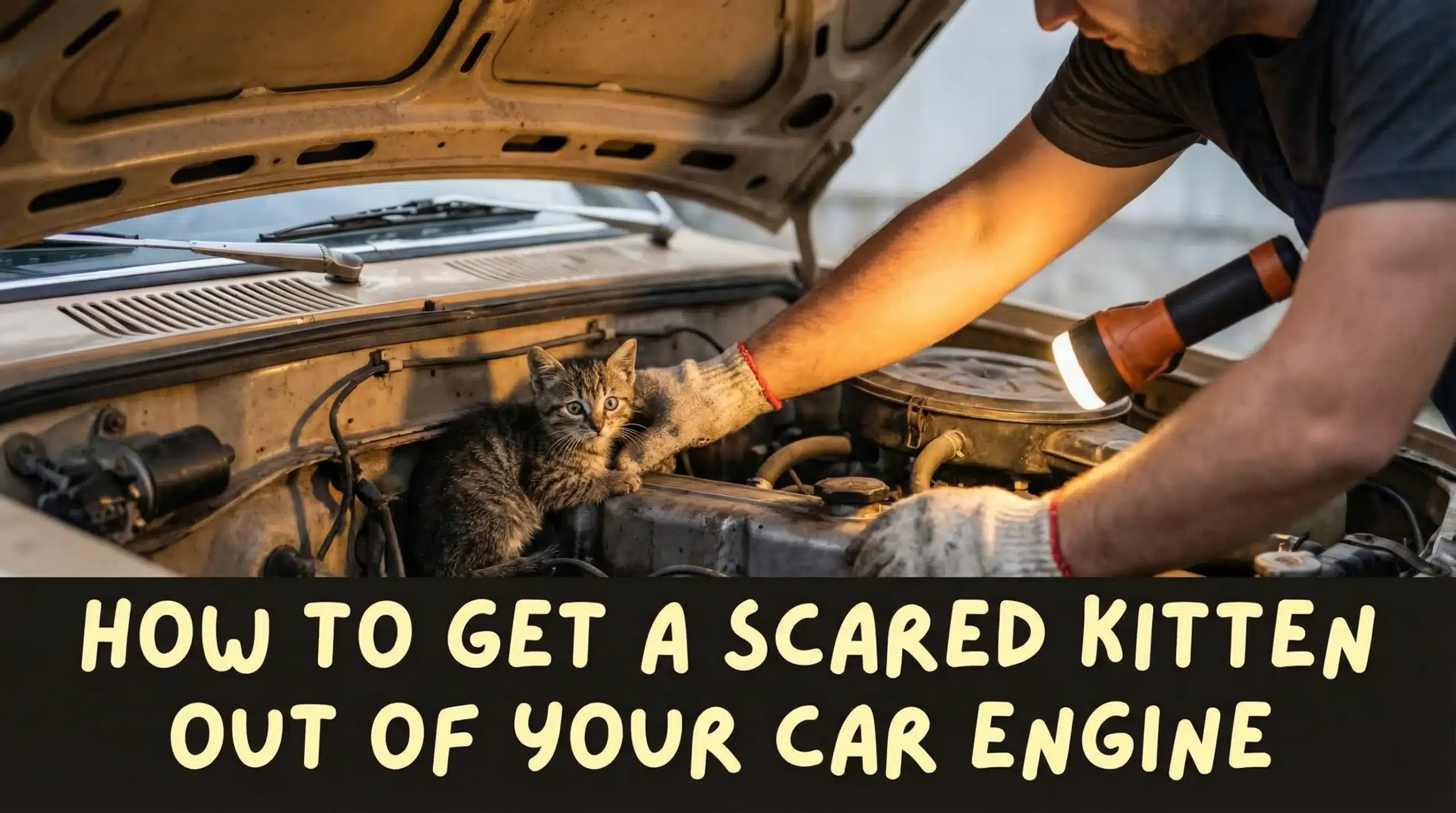
Once you’ve taken the initial precautions, it’s time to locate the kitten. Carefully open the hood of your car and look inside. Pay close attention to tight spaces, such as near the battery, under the air filter, or around the engine block. Kittens are small and can squeeze into the tiniest of spaces.
If you can’t see the kitten right away, crouch down and check underneath the car.
Sometimes, they hide in the wheel wells or other hidden spots. Use a flashlight to get a better view of dark areas.
Real-life example: A man in York County discovered a kitten trapped in his truck engine on a scorching summer day. He acted quickly, contacted animal control, and saved the kitten from overheating. This story highlights the importance of assessing the situation promptly and seeking help if needed.
Taking these immediate actions sets the stage for safely rescuing the kitten. Remember, patience and care are your best tools in this delicate situation.
Gather Necessary Supplies
Before attempting to rescue the kitten, you’ll need to gather a few essential items. These supplies will not only make the process smoother but also ensure the kitten’s safety and your own. Think of it as assembling your “kitten rescue toolkit.” Here’s what you’ll need:
-
Flashlight
A flashlight is crucial for spotting the kitten, especially if it’s hiding in a dark or hard-to-reach area. Kittens often tuck themselves into tight spaces, so a bright light will help you locate them quickly. -
Thick Gloves
Protect your hands with a sturdy pair of gloves. A scared kitten might scratch or bite out of fear, even if it doesn’t mean to harm you. Thick gloves will keep your hands safe while handling the kitten. -
Towel or Blanket
Use a soft towel or blanket to gently wrap the kitten once you’ve retrieved it. This will help calm the kitten and prevent it from wriggling away. It also provides a layer of protection for both you and the kitten. -
Cat Carrier or Box
Have a secure place ready to put the kitten after rescuing it. A cat carrier or a sturdy box with air holes works well. This ensures the kitten stays safe and doesn’t run off while you figure out the next steps. -
Food or Treats
A tempting snack can work wonders in coaxing a kitten out of hiding. Wet cat food, tuna, or even a small piece of chicken can lure the kitten toward you. The smellier the food, the better! -
Long Stick or Broom Handle
If the kitten is out of reach, a long stick or broom handle can help gently nudge it toward a safer spot. Be careful not to poke or scare the kitten—gentle movements are key. -
Phone with Emergency Contacts
Keep your phone handy with numbers for local animal control, a nearby veterinarian, or even the fire department. If the situation becomes too challenging, professional help might be necessary.
Real-life example: In Fort Worth, technicians had to remove parts of a car’s belly pan to rescue a kitten hiding near the engine. Having the right tools and supplies on hand made the process much easier and ensured the kitten’s safety.
Pro Tip: Assemble Your Kitten Rescue Kit in Advance
If you live in an area with frequent stray cats, consider keeping these supplies in your car or garage. You never know when you might need them!
Step-by-Step Methods to Get a Kitten Out of a Car Engine
Lure the Kitten Out with Food or Treats
When it comes to coaxing a scared kitten out of your car engine, food can be your secret weapon. Kittens have a hard time resisting the smell of something delicious, even when they’re frightened. Place a small dish of wet cat food, tuna, or shredded chicken near the car. The strong aroma will grab the kitten’s attention and encourage it to come out of hiding.
If you don’t have these on hand, even dry cat treats can work in a pinch.
To make this method more effective, create a quiet environment. Turn off any loud noises, such as music or nearby machinery, so the kitten feels safe enough to approach the food. Be patient and give it time to sniff its way out. If the kitten starts moving toward the food, avoid sudden movements that might scare it back into hiding.
Pro Tip: Use a towel or blanket to create a soft “landing zone” near the food. Once the kitten steps out, you can gently wrap it up for safety.
Use Gentle Sounds to Encourage Movement
If food doesn’t do the trick, try using soft, soothing sounds to coax the kitten out. Speak in a calm, reassuring voice. You can also mimic the sound of a mother cat by softly meowing or purring. This can help the kitten feel less threatened and more inclined to move toward you.
Another effective method involves using a toy that makes noise, like a small jingly ball or a crinkly cat toy. Shake it gently near the car to pique the kitten’s curiosity.
Avoid loud or abrupt noises, as these can make the kitten retreat further into the engine.
For kittens that seem particularly scared, consider using a heat source like a covered hot water bottle placed near the car. The warmth can mimic the comfort of a mother cat and encourage the kitten to come closer. Just ensure the heat source is not too hot to avoid any risk of burns.
Wait Patiently and Monitor the Kitten
Patience is your best ally when dealing with a frightened kitten. If the kitten doesn’t respond to food or sounds right away, step back and give it some space. Sometimes, the kitten just needs time to feel safe enough to emerge on its own.
While waiting, keep an eye on the kitten’s movements. Use a flashlight to check if it’s shifting positions within the engine.
If the kitten appears stuck or distressed, avoid forcing it out. Instead, prepare to call for professional help, such as animal control or a local veterinarian.
Important Reminder: Always keep a kitten rescue kit handy. Include essentials like thick gloves, a towel, and a secure carrier. These items will make the process smoother and safer for both you and the kitten.
These methods are designed to prioritize the kitten’s safety while making the process as stress-free as possible. Getting a cat out of a car engine requires patience and care; try enticing it with food or using soothing sounds.
Gently Extract the Kitten if Within Reach
If the kitten is within reach, you can attempt a gentle extraction. Start by putting on thick gloves to protect your hands. A frightened kitten may scratch or bite, not out of malice but sheer panic. Approach slowly and avoid sudden movements. Your calm demeanor will help reassure the kitten.
Once you locate the kitten, use a towel or blanket to carefully wrap it. This not only prevents the kitten from wriggling away but also provides a sense of security.
If the kitten is stuck in a tight spot, avoid pulling forcefully.
Instead, use a long stick or broom handle to gently nudge it toward an accessible area.
Always prioritize the kitten’s comfort and safety during this process.
If the kitten appears cold or lethargic after extraction, provide warmth immediately. A hot water bottle wrapped in a towel can serve as a temporary heat source. Place it near the kitten, ensuring it has space to move away if it gets too warm. This simple step can help stabilize the kitten until you can seek further care.
When to Call for Professional Help
Sometimes, despite your best efforts, the kitten may remain unreachable or appear injured. In such cases, calling for professional help becomes essential. Contact local animal control, a veterinarian, or even the fire department if necessary. These professionals have the tools and expertise to safely rescue the kitten without causing harm.
If the kitten is trapped in a particularly tight or dangerous spot, avoid attempting to dismantle parts of your car yourself.
Professionals can handle such situations more effectively.
If the kitten shows signs of distress, such as heavy breathing or visible injuries, prioritize getting expert assistance.
Keep your phone handy with emergency contacts saved. Quick action can make all the difference in ensuring the kitten’s safety.
Remember, seeking help is not a sign of failure but a responsible choice when the situation demands it.
What Else to Know About Kitten Safety
Why Kittens Hide in Car Engines
Kittens are tiny explorers with a knack for finding the coziest, most hidden spots. Car engines, with their warmth and tight spaces, feel like the perfect hideaway for these little adventurers. During colder months, the engine’s residual heat becomes irresistible to kittens seeking shelter from the chill. The dark, enclosed environment also gives them a sense of security, mimicking the safety of a mother’s embrace.
However, this seemingly safe haven can quickly turn dangerous.
Moving parts, high temperatures, and the risk of being trapped make car engines hazardous for kittens. Their instinct to hide when scared often worsens the situation, as they burrow deeper into the engine to avoid perceived threats. Understanding this behavior helps you approach the rescue process with empathy and patience. If you frequently encounter stray cats in your area, consider providing alternative shelters.
A simple insulated box lined with blankets can offer a safer refuge. This small effort can prevent kittens from seeking warmth in risky places like car engines.
The Importance of Acting Quickly and Carefully
When you hear faint meows from your car, time becomes your most valuable asset. Acting quickly can mean the difference between life and death for a kitten trapped in your engine. The longer the kitten stays inside, the higher the risk of injury or exposure to extreme temperatures. Immediate action ensures the kitten’s safety and minimizes potential harm. Careful handling is equally crucial. A frightened kitten may lash out, not out of aggression but pure fear. Thick gloves and a calm demeanor can help you manage the situation without causing additional stress.
Avoid rushing or making sudden movements, as these can scare the kitten further into hiding.
If the kitten appears stuck or injured, professional help becomes essential. Animal control officers and veterinarians have the tools and expertise to handle complex rescues. Never attempt to dismantle car parts yourself unless you’re confident in your abilities. Prioritizing the kitten’s safety over speed ensures a successful rescue.
Safely rescuing a scared kitten from your car engine takes patience, care, and the right approach. Acting quickly while staying calm ensures the kitten’s safety and prevents unnecessary harm. If you ever wonder how to get kitten out of car engine, remember that simple steps like using food or gentle sounds can make a big difference.
Always keep emergency contacts handy for professional help when needed.
Preventive measures, such as checking your car before starting and providing outdoor shelters, can save lives. These tips not only protect kittens but also safeguard your vehicle from potential damage. Your thoughtful actions can create a safer environment for both animals and your car.

In her previous life, Lisa traveled extensively, both for work and leisure. After the pandemic struck, Lisa locked up her luggage and adopted a cat ever since.
Lisa is now an avid cat lover, she devotes most of her free time serving as butler to her adorable feline at home. When she is not with her cat, she can be seen using her phone sourcing for the latest cat supplies online.