If you’re here, you’re likely eager to learn how to bottle-feed a kitten and kick-start on this rewarding journey. Proper nutrition is essential for a kitten’s development, and bottle-feeding plays an important role in giving them the right start. Giving a kitten milk from a bottle ensures it receives the crucial nourishment for healthy growth.
Understanding how to feed a kitten with a bottle involves more than just technique. It requires a keen eye on the feeding schedule and a focus on safety. Each kitten’s development hinges on these factors.
Now, let’s get into the details of bottle-feeding a kitten and helping your tiny companion flourish.
What You Need to Bottle Feed
Essential Equipment for Bottle Feeding
To successfully bottle-feed a kitten, you’ll need a few key items. Here’s what I recommend:
Kitten Nursing Bottle and Nipples
A kitten nursing bottle is specifically designed for tiny mouths. These bottles come with nipples that mimic a mother cat’s teat, making it easier for kittens to latch on. Make sure to have a few extra nipples on hand, as they can wear out over time.
Kitten Formula
Choosing the right Kitten Formula is highly beneficial. Unlike cow’s milk, which lacks essential nutrients and can cause digestive issues, kitten formula provides the necessary nutrition. Options like KMR (Kitten Milk Replacer) or homemade formulas like Hoskins are ideal. Always ensure the formula is designed for kittens to avoid any health complications.
Cleaning Supplies
Keeping everything clean is vital. You’ll need supplies to clean the bottles and nipples thoroughly after each use. This helps prevent bacteria buildup, ensuring your kitten stays healthy.
Remember, a clean feeding environment is just as important as the formula itself.
Choosing the Right Formula
Picking the right formula can make all the difference in your kitten’s development.
Here’s what to consider:
Commercial Kitten Formula Options
There are several commercial options available, such as KMR. These formulas are specifically designed to meet the nutritional needs of kittens. They come in both powdered and liquid forms, offering convenience and ease of use.
Avoiding Cow’s Milk
It’s important to avoid cow’s milk. It doesn’t provide the necessary nutrients and can lead to diarrhea, which can be life-threatening for young kittens. Stick to approved kitten formulas to ensure your kitten’s health and well-being.
Here’s a quick comparison table of some popular kitten formulas:
|
Product Name |
Form |
Nutritional Benefits |
Storage |
|---|---|---|---|
|
KMR |
Powdered |
Complete nutrition for kittens |
Refrigerate after mixing |
|
Hoskins |
Homemade |
Customizable nutrition |
Use immediately |
|
PetAg |
Liquid |
Ready-to-use convenience |
Refrigerate after opening |
Feeding a kitten with a bottle might seem daunting at first, but with the right equipment and formula, you’ll be well on your way to nurturing a healthy and happy kitten. Remember, patience and consistency are key. And don’t forget to give your kitten some love and attention, just like you would with any other cat.
Step-by-Step Detailed Instructions on How to Feed Kitten with Bottle
Feeding a kitten with a bottle can be a heartwarming experience. Watching those tiny paws knead the air as they drink is truly rewarding. However, it’s crucial to get the process right to ensure your kitten grows healthy and strong. Let’s walk through the steps to make sure you’re bottle-feeding like a pro.
Preparing the Kitten Formula
Before you start, gather everything you need. Proper preparation is key to a successful feeding session.
Measuring and Mixing
First, measure the formula according to the instructions on the package. Each brand might have slightly different requirements, so always double-check. Use a clean measuring spoon or cup to ensure accuracy. Mix the formula thoroughly until there are no lumps. This ensures your kitten gets all the nutrients they need.
Ensuring the Right Temperature
Kittens are sensitive to temperature. The formula should be warm, not hot. Test it on your wrist; it should feel slightly warm, similar to body temperature. If it’s too hot, let it cool down. If it’s too cold, warm it gently. A microwave can create hot spots, so it’s better to use a warm water bath.
Positioning the Kitten Correctly Before Feeding
Getting the position right is crucial for a safe feeding experience.
Proper Holding Techniques
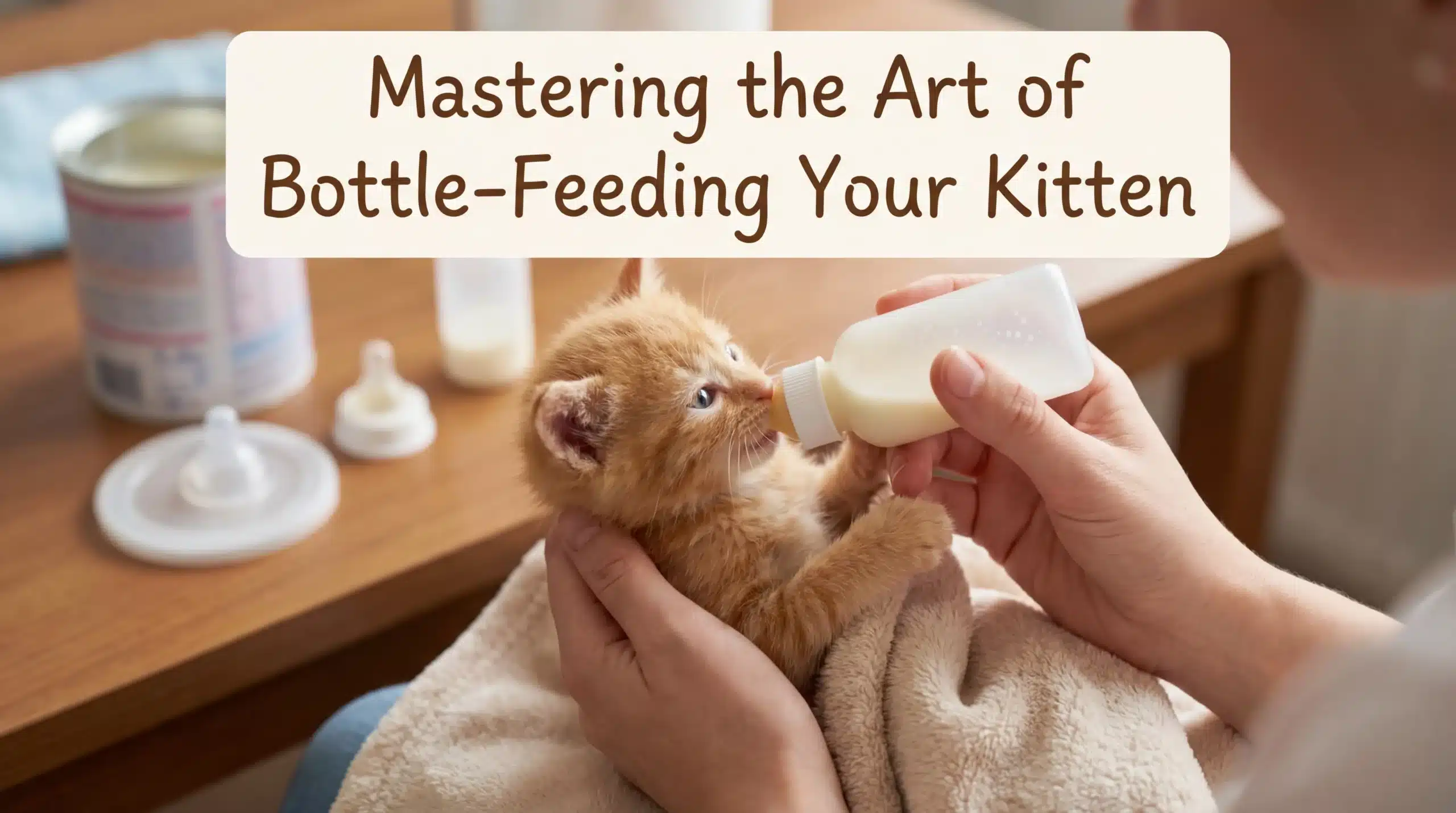
Hold the kitten in a natural nursing position. Place them on their stomach, similar to how they’d nurse from their mother. Support their head gently. This position helps prevent choking and ensures they can swallow easily.
Creating a Comfortable Environment
Make sure the environment is calm and quiet. A soft towel or blanket can provide comfort and warmth. This setting helps the kitten feel secure and focused on feeding.
Feeding Technique
Now that you’re ready, let’s focus on the actual feeding process.
Encouraging the Kitten to Latch
Gently introduce the nipple to the kitten’s mouth. Sometimes, a little patience is needed. If the kitten struggles, try a few drops of formula on their lips to encourage them. This can help the kitten find the bottle more easily.
Monitoring the Feeding Process
Keep an eye on the kitten as they feed. Ensure they’re swallowing and not gulping too quickly. If formula spills from their mouth or nose, pause and let them catch their breath. Hold the bottle correctly to control the flow and prevent overfeeding. Feeding a kitten with a bottle requires patience and practice. With these steps, you’ll ensure your kitten gets the nutrition they need while building a strong bond.
Remember, each kitten is unique, so adjust your approach as needed. Happy feeding!
Potential Challenges and Solutions
Feeding a kitten can sometimes feel like a rollercoaster ride. One moment, everything goes smoothly, and the next, you’re faced with unexpected challenges. I remember the first time my kitten refused to eat. Panic set in, and I scrambled for solutions.
Here’s some common hurdles and how to tackle them effectively.
Kitten Refuses to Eat
When a kitten refuses to eat, it can be concerning. Understanding the reasons behind this behavior is crucial.
Possible Causes
Several factors might cause a kitten to refuse food:
-
Illness: A sick kitten might lose its appetite. Look for other symptoms like lethargy or sneezing.
-
Stress: Changes in the environment, like a new home or loud noises, can stress a kitten.
-
Formula Issues: The formula might be too cold, too hot, or not to the kitten’s liking.
Solutions and Tips
Addressing these issues requires patience and observation:
-
Check Health: If illness seems likely, consult a vet. They can provide guidance and treatment.
-
Create Comfort: Ensure a calm and quiet feeding environment. Familiar scents and gentle handling can soothe a stressed kitten.
-
Adjust Formula: Experiment with different formulas or temperatures. Sometimes, a slight change makes a big difference.
Lauren Smith, a fellow cat enthusiast, once shared how her kitten, Sassy, refused to eat canned food she used to love. She sprinkled something tasty on it, and Sassy started eating again. This simple trick can work wonders.
Formula Spillage
Spillage during feeding can be messy and frustrating. It often happens when the flow is too fast or the kitten struggles with the bottle.
Preventive Measures
Preventing spillage involves a few careful steps:
-
Control Flow: Ensure the nipple size is appropriate. A slow flow prevents overwhelming the kitten.
-
Proper Positioning: Hold the kitten correctly, with its stomach down. This position mimics natural nursing and reduces spillage.
Cleaning Up
Despite precautions, spills happen. Here’s how to manage them:
-
Quick Wipe: Keep a cloth handy to wipe spills immediately.
-
Thorough Cleaning: Clean the feeding area and bottle thoroughly after each session. This prevents bacteria buildup and keeps your kitten healthy.
Managing these challenges requires patience and adaptability. Each kitten is unique, and what works for one might not work for another. With these tips, you’ll navigate the ups and downs of bottle-feeding like a pro.
Pro Tips and Common Mistakes to Avoid
Feeding a kitten can feel like a delicate dance. You want to get every step right to ensure your little furball grows healthy and strong. Over the years, I’ve learned a few tricks that make the process smoother and more enjoyable.
Pro Tips
Keeping a Feeding Log
One of the best ways to stay organized is by keeping a feeding log. This simple tool helps you track feeding times, amounts, and any observations about your kitten’s behavior. I remember when I first started bottle-feeding, I often lost track of time. A feeding log kept me on schedule and ensured my kittens received consistent care.
-
Why it matters: A feeding log helps you notice patterns and changes in your kitten’s eating habits. If your kitten suddenly eats less, you’ll catch it early and can consult a vet if needed.
-
How to do it: Use a notebook or a digital app to record each feeding session. Include details like the time, amount of formula, and any notes on the kitten’s behavior.
Regularly Checking Bottle Nipples
Bottle nipples can wear out over time, affecting the flow of formula. Regular checks ensure your kitten gets the right amount of food without struggling.
-
Why it matters: A worn-out nipple can lead to too fast or too slow a flow, causing frustration for both you and your kitten.
-
How to do it: Inspect the nipple before each feeding. Look for cracks or signs of wear. Replace nipples as needed to maintain a smooth feeding experience.
Common Mistakes
Using the Wrong Formula
Choosing the right formula is crucial for your kitten’s health. Many new caregivers mistakenly use cow’s milk, which lacks essential nutrients and can cause digestive issues.
-
Why it’s a mistake: Cow’s milk doesn’t provide the necessary nutrition for kittens and can lead to diarrhea, which is dangerous for young kittens.
-
How to avoid it: Stick to commercial kitten formulas like KMR or PetAg. These products are specifically designed to meet the nutritional needs of kittens.
Incorrect Feeding Position
The way you hold your kitten during feeding can impact their ability to swallow safely. An incorrect position might lead to choking or aspiration.
-
Why it’s a mistake: Holding a kitten on its back can cause formula to enter the lungs, leading to serious health issues.
-
How to avoid it: Always place your kitten on its stomach, mimicking the natural nursing position. Support their head gently and ensure they’re comfortable.
Feeding kittens requires attention to detail and a bit of practice. With these pro tips, you’ll navigate the process like a seasoned caregiver. Remember, each kitten is unique, so stay flexible and adjust your approach as needed. Happy feeding!
Feeding your kitten with care and precision is more than just a task—it’s a commitment to their future health and happiness. By following the right techniques and maintaining a consistent schedule, you ensure your kitten’s digestion stays regulated, providing them with a sense of security. This routine not only supports their growth but also helps prevent issues like obesity as they mature into adult cats.
Always keep a vigilant eye on their health, as early intervention can prevent complications. If you encounter persistent feeding challenges, don’t hesitate to seek veterinary advice. Remember, your dedication today lays the foundation for a healthy, thriving cat tomorrow.

In her previous life, Lisa traveled extensively, both for work and leisure. After the pandemic struck, Lisa locked up her luggage and adopted a cat ever since.
Lisa is now an avid cat lover, she devotes most of her free time serving as butler to her adorable feline at home. When she is not with her cat, she can be seen using her phone sourcing for the latest cat supplies online.